Start your free midface ratio measurement scan
Full resolution
478 landmarks
During free scans, your photo stays on your device and is not uploaded to our server. All analysis happens in your browser. We keep only anonymous numerical, non-identifiable measurements, never your photo. See our privacy promise.
Width-to-height compactness
Midface ratio and fWHR calculator
Midface ratio describes the central block of the face, from the cheekbones to the base of the nose. It is the measurement most responsible for a face reading as compact or elongated, and this free AI face scan measures it directly alongside the closely related facial width to height ratio, or fWHR.
Free basic reports require no credit card, no account, no password. Your image is never uploaded or stored. Analysis happens in your browser and your session data is cleared when you close or refresh the page.
In short
Midface ratio compares midfacial height, pupil line to nose base, against bizygomatic width, cheekbone to cheekbone. Lower values read as a compact midface, higher values read as elongated. Facemap measures both spans from the same 3D mesh, so camera distance does not affect the result.
- 3D landmarks
- 4783D landmarks
- Scan time
- ~20sScan time
- Uploads, runs in browser
- 0Uploads, runs in browser
- No account required
- FreeNo account required
Where it is measured
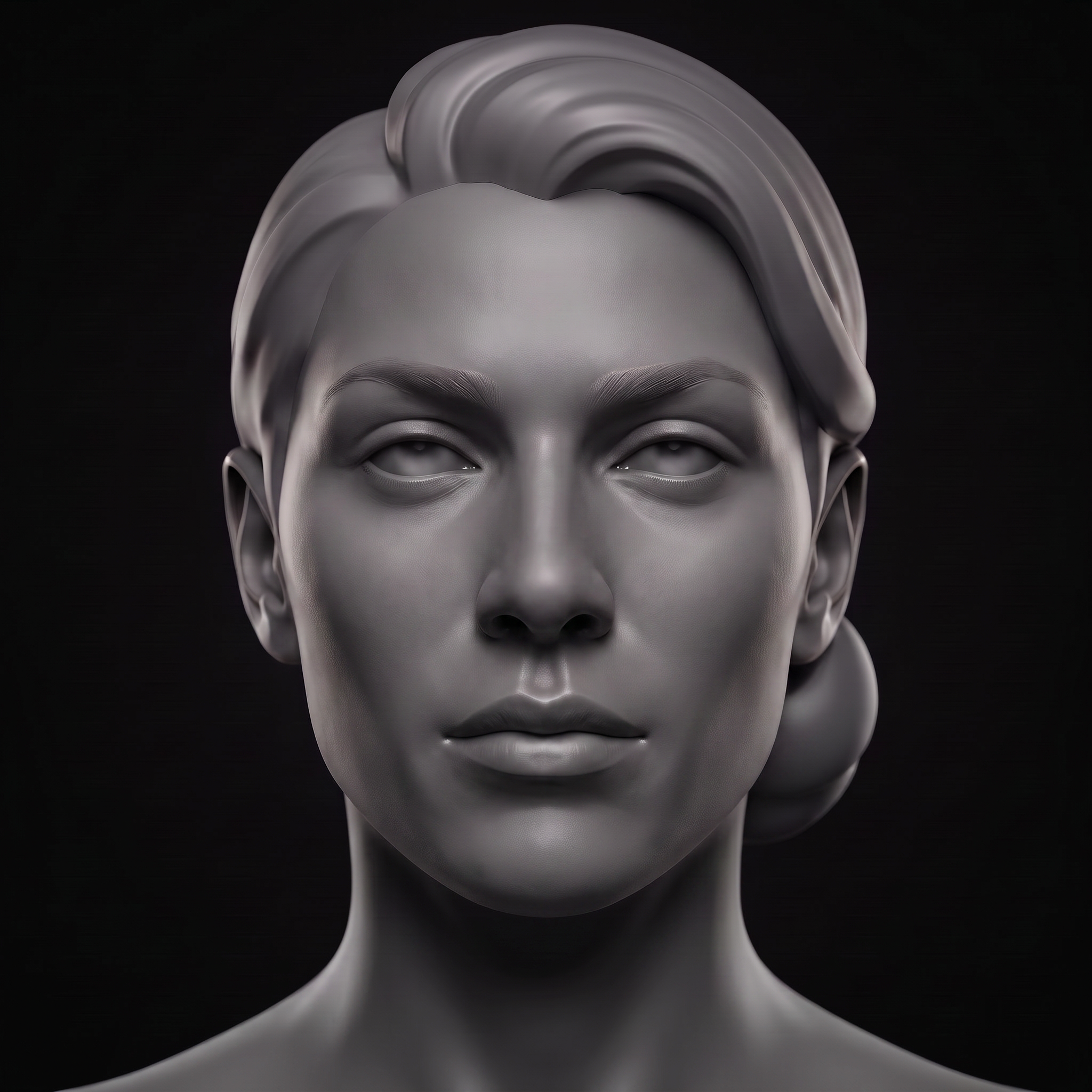
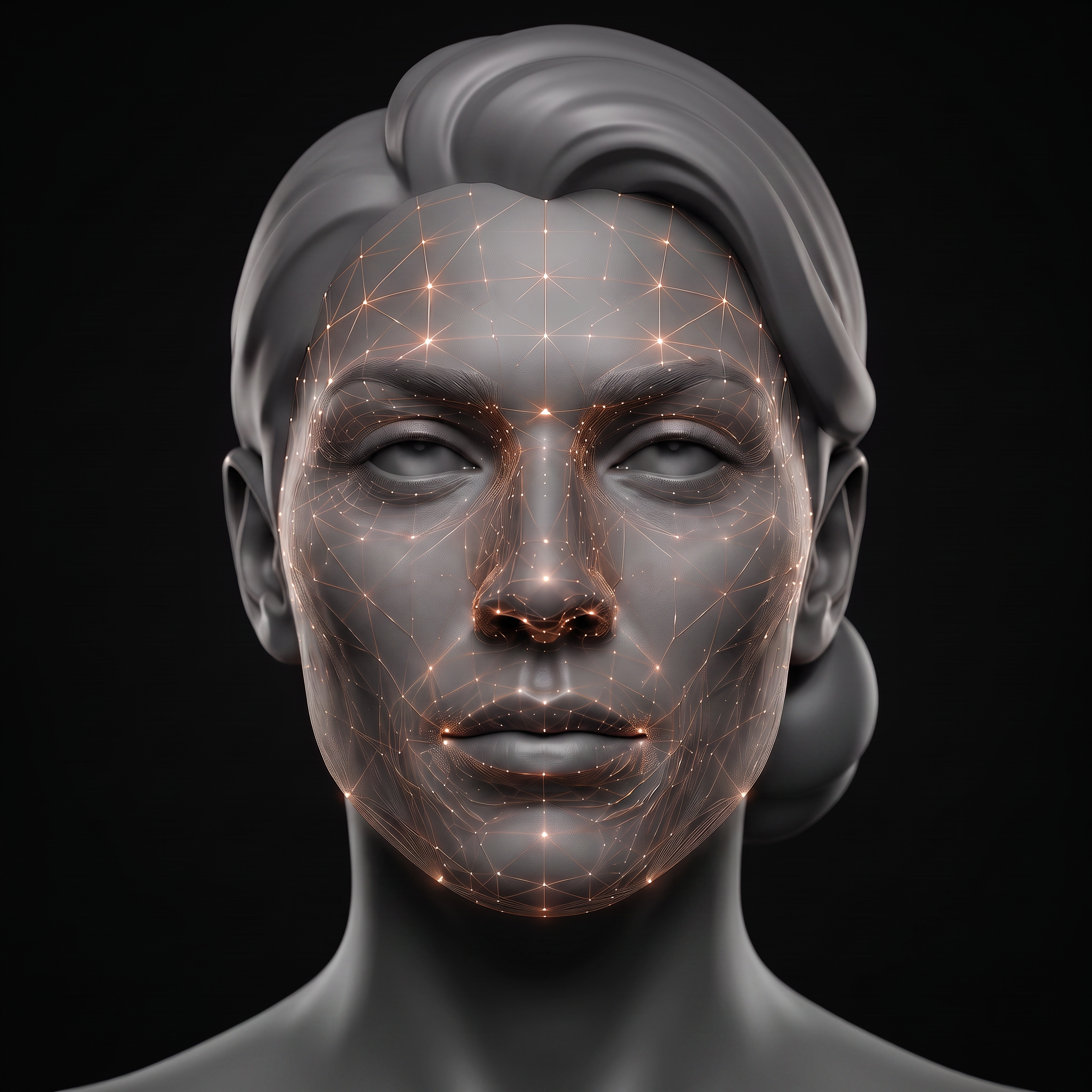
Midface ratio on the landmark mesh.
The overlay is drawn from the same 478 point MediaPipe landmark set Facemap uses on your own scan, so every caliper, axis and node sits on the exact anatomy the measurement is taken from.
Sample reading, Width-to-height compactness

- Bizygomatic width
- 138.4 mm
- Midface height
- 66.9 mm
- Compactness ratio
- 0.483
- Range position
- Balanced
How the scan works
Capture
Guided front-on frame with even light, no upload.
Landmark
478 point mesh placed on your face in real time.
Report
Midface ratio measured, normalised and explained.
What is midface ratio?
The ratio of bizygomatic width, cheekbone to cheekbone, against the vertical distance from the pupil line to the base of the nose.
How Facemap measures midface ratio
Both spans come from the same mesh, so the ratio is unaffected by camera distance. Facemap reports it as a single figure with a plain-language band.
What the typical range looks like
Lower ratios read as compact, higher ratios read as elongated. Both are common, and the full report plots your figure against the Facemap reference set.
How to read your result
Midface ratio pairs naturally with facial thirds. Read them together to see whether length sits in the middle of the face or below it.
The midface ratio formula: how we calculate it
Pupil line to upper lip distance, in interpupillary units. Landmark numbers are MediaPipe Face Landmarker indices, and every distance is normalised to your own face so camera distance and image size cancel out.
|y(pupil midpoint) - y(13)| / dist(468, 473)
- Landmarks used
- 468, 473, 13
- Reference target
- 1.00
- Tolerance band
- 0.20
Your reading is compared with that published reference on a Gaussian match curve: score = round( 100 x exp( -0.5 x ( (reading - target) / tolerance )^2 ) ), clamped to 1 to 99. Basis for the reference value: midface compactness ratio used in facial proportion research. The headline Attractiveness Score works differently: all readings are corrected for head angle and expression, weighted by confidence and mapped onto a 1 to 100 scale by a model calibrated against a published research set of more than Facemap scans.
Read the full Facemap methodology, including how the 22 measurement categories combine into your Attractiveness Score.
Midface ratio reference table
Midface ratio bands and how each one reads.
- Below 0.90Very compact
Short midface, wide cheekbone span
- 0.90 to 1.00Compact
The most commonly measured band
- 1.00 to 1.10Balanced
Height and width closely matched
- Above 1.10Elongated
Long midface relative to width
Midface ratio versus fWHR
Facial width to height ratio, fWHR, is the research convention: bizygomatic width divided by the height from upper lip to brow. Midface ratio uses the pupil line to nose base span instead, which is more stable on a surface scan because it avoids the variable brow landmark. Facemap reports both so your result is comparable either way.
What drives a compact midface
Compactness is a combination of width and vertical span, and several factors feed into it.
- Bizygomatic width, the cheekbone to cheekbone distance
- Vertical span from pupil line to nose base
- Cheekbone projection, which reads as width in a photo
- Soft-tissue volume, which shifts measured width slightly
How midface ratio affects how your face reads
The midface sits between the two features people look at first, the eyes and the mouth, so its proportion sets the rhythm of the whole face. A compact midface tightens the distance between them and reads as youthful and concentrated. An elongated midface spreads them and reads as elegant and lengthened. Neither is scored higher.
The midface ratio formula, step by step
The calculator reduces the central face to two spans and a single division.
- Measure bizygomatic width, cheekbone to cheekbone, from the 3D mesh
- Measure the vertical span from the pupil line to the base of the nose
- Divide the width by the vertical height
- Compare the result against the compact-to-elongated bands
- Repeat with brow to upper lip height for the research fWHR figure
Your reading
Measure your midface ratio in about twenty seconds.
The scan runs in your browser. Nothing is uploaded, and free basic reports need no account.
Questions
Midface ratio calculator: frequently asked questions
Does the midface ratio change with weight?
Soft-tissue changes can shift the measured width slightly, which is why repeat scans over time are more informative than a single reading.
Is there an ideal midface ratio?
No single value is ideal. Facemap reports where you sit and what that implies for how your face reads.
What is a good fWHR?
Reported averages cluster near 1.9 for the research definition, with wide variation. Facemap gives your measured figure rather than a target.
Is a compact midface better?
No. Compact midfaces read as concentrated and youthful, elongated midfaces read as lengthened and elegant. Both appear across faces widely regarded as attractive.
Can I measure midface ratio from a photo?
A live scan is more reliable because it uses 3D landmarks and corrects for head angle, which a flat photo cannot.
What is the midface ratio formula?
Bizygomatic width, cheekbone to cheekbone, divided by the vertical span from the pupil line to the nose base. Lower results read as compact, higher results read as elongated.
Is the midface ratio calculator an AI face scan?
Yes. It runs Google's MediaPipe Face Mesh machine learning model in your browser to place 478 3D landmarks, nothing uploaded, so the ratio comes from deterministic geometry rather than a guess.
Related tools
Measurements that read alongside midface ratio.
Vertical proportion balance
Facial thirds face scan
The face is divided into three equal vertical zones: hairline to brow, brow to nose base, and nose base to chin. We measure how evenly your landmarks fall within each.
Intercanthal distance ratio
Eye spacing face scan
The distance between the inner eye corners relative to the width of a single eye, a proportion that helps describe overall facial spacing.
Every tool