Am I attractive?
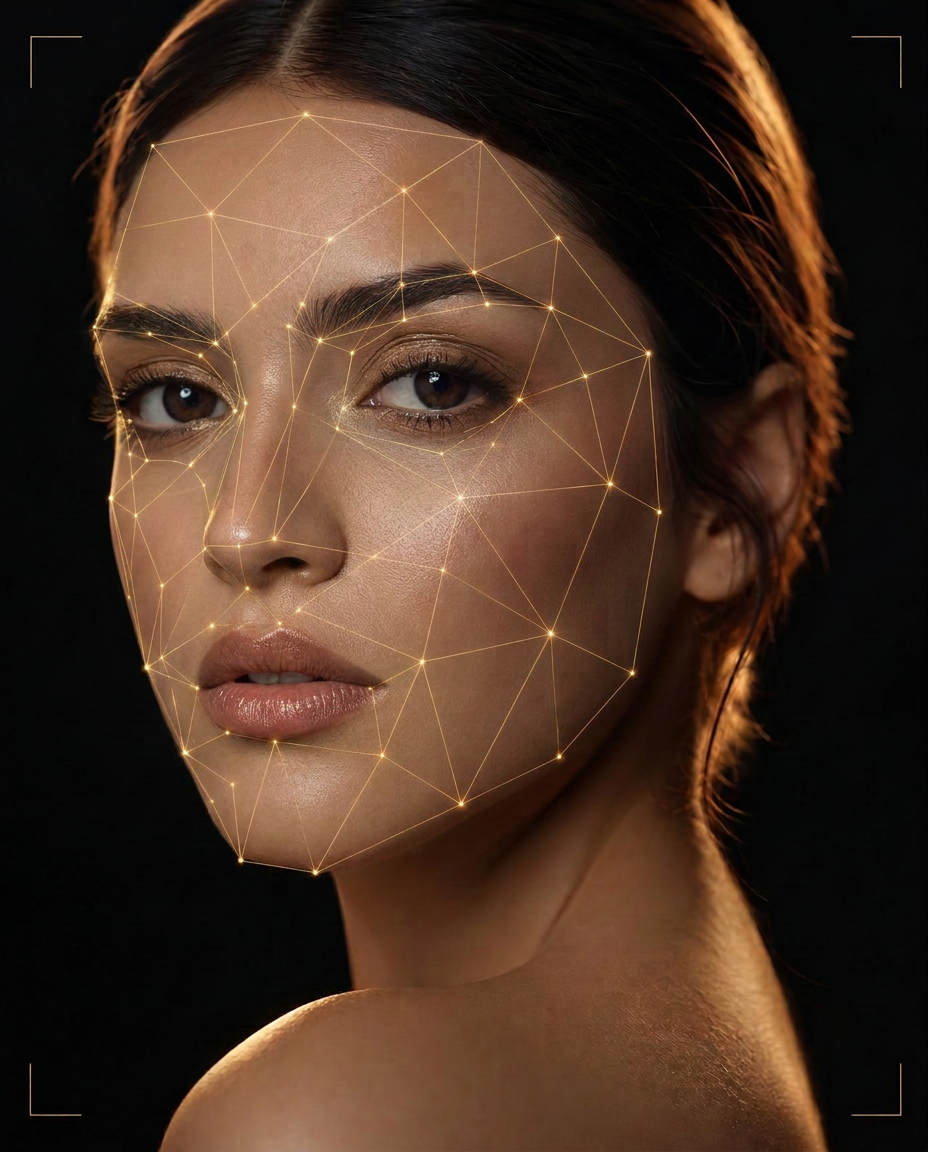
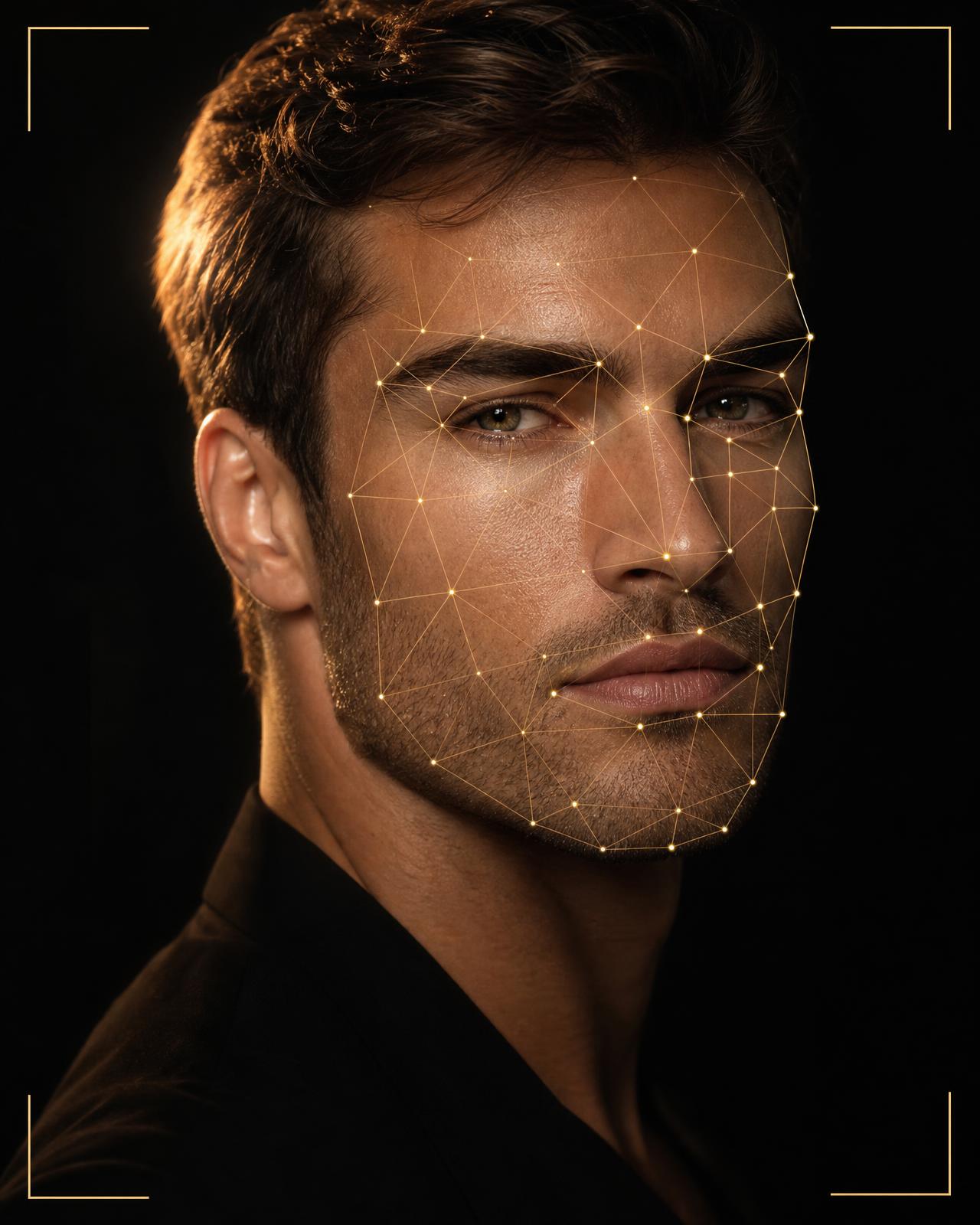
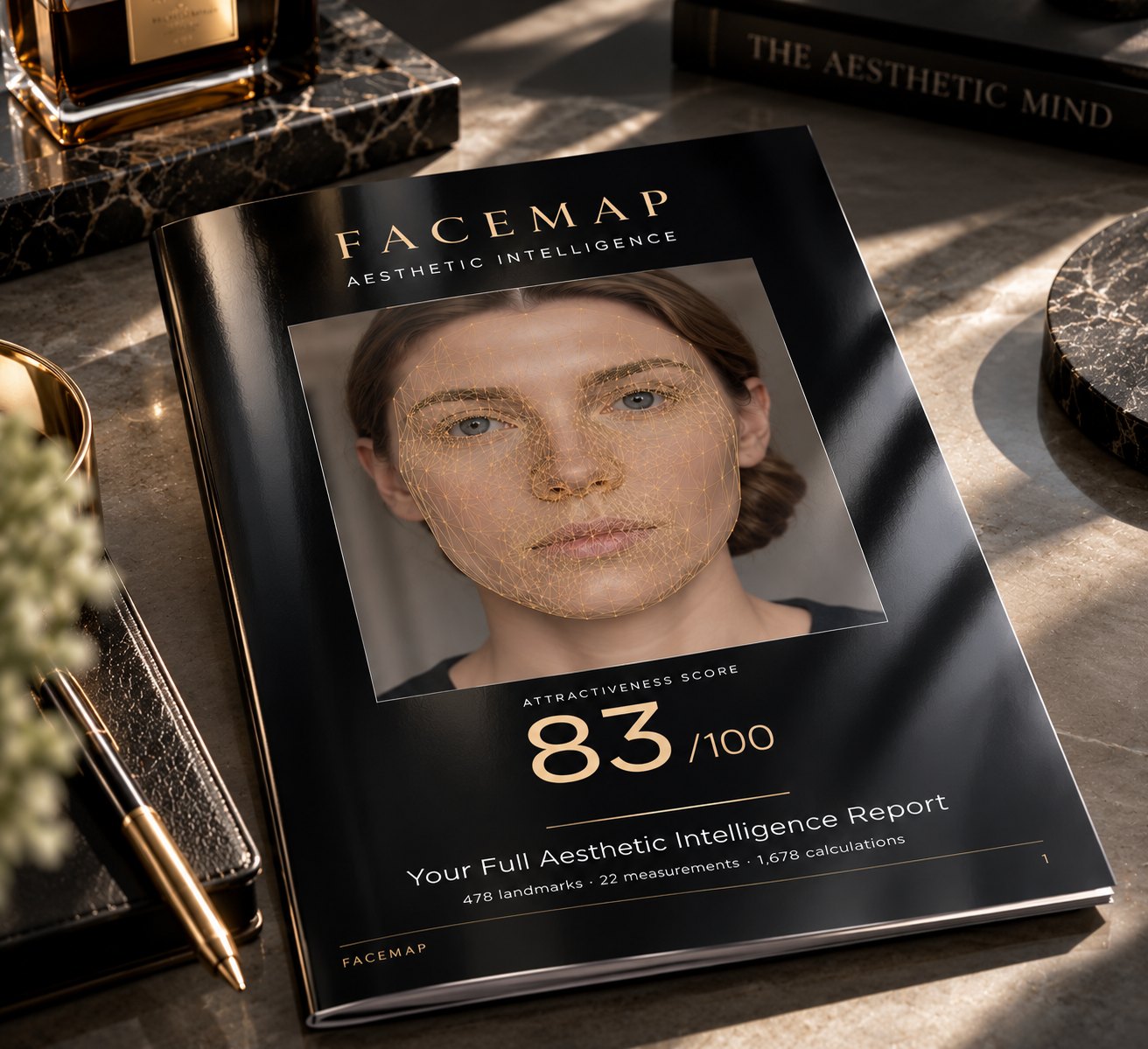
An attractiveness score out of 100, built from 478 facial landmarks, 22 measurements and over 1,600 calculations, taken across three photographs at different distances.
Free scans run in your browser. Your photo stays on your device; we keep only anonymous measurements. See our privacy promise.
What we measure
478 landmarks. 22 measurements. Over 1,600 calculations.
From canthal tilt to facial thirds, every measurement is taken on your device, corrected for head angle and expression, and explained in plain language.
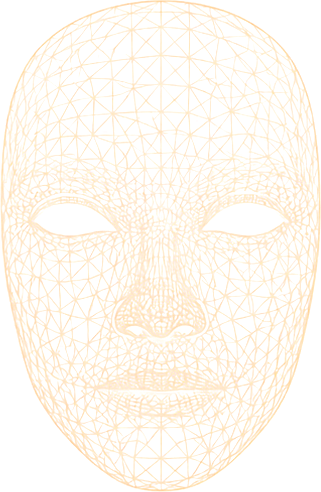
Mesh build
478 vertices
Topology: tesselated
Depth: xyz
How it works
Three steps, one minute, one clear reading.
01
Capture
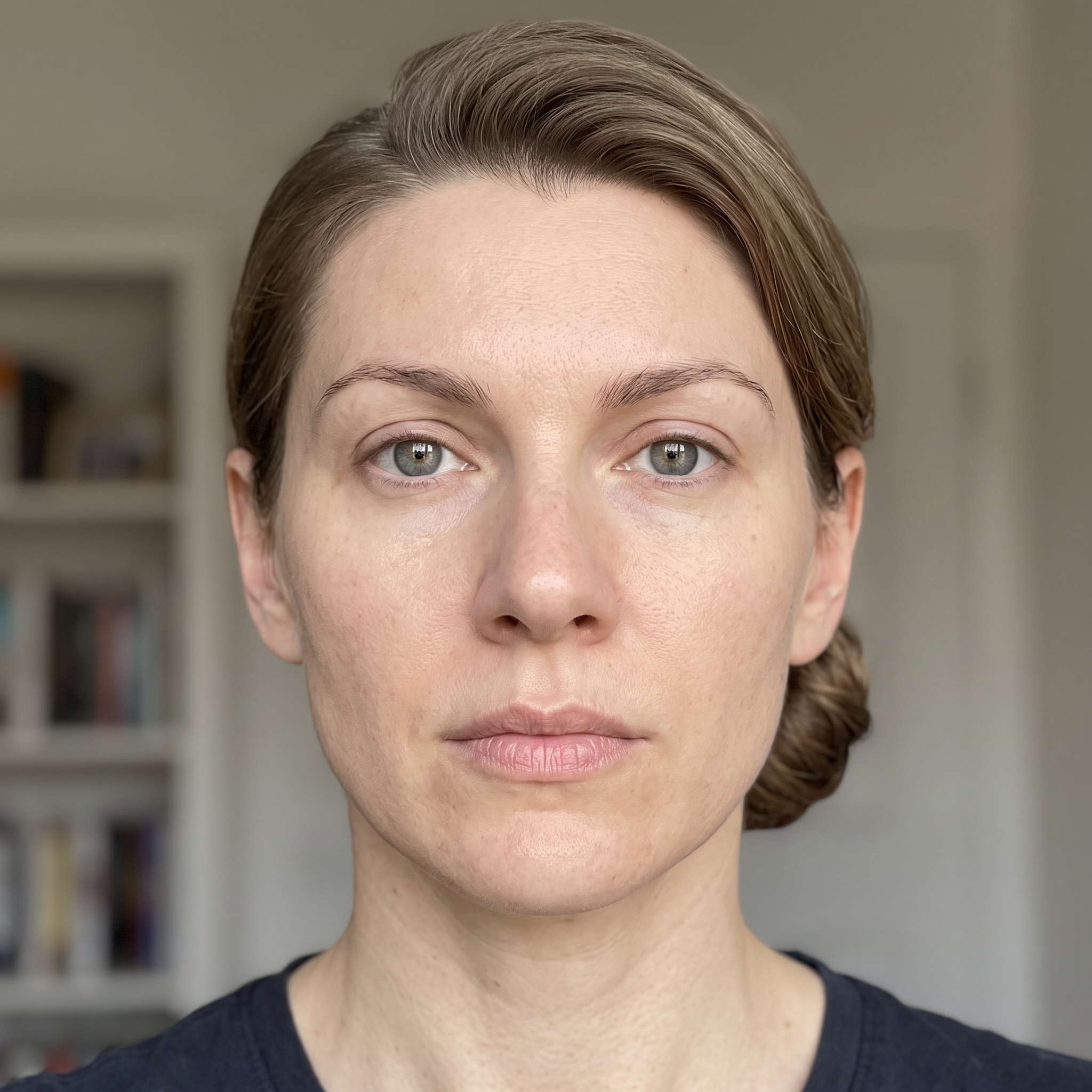
Face the camera in even light. On-screen guidance holds your angle and distance steady until the frame locks.
02
Measure
Hundreds of landmarks are placed on your face and turned into proportion, symmetry and balance measurements.
03
Understand
Every number arrives with plain-language meaning, so a reading feels like insight rather than a verdict.
Built to be private by default.
On your device
Your free scan images never leave your device. The scan runs in your browser, and nothing is uploaded or stored for a free reading.
Gone when you leave
Free scan photographs exist only in your browser's memory while the scan is running. They are cleared as soon as you close or refresh the page, and are never stored by us.
Anonymous by design
Numbered geometric measurements are added to the Facemap distribution without a name, an account or an image, so we can track anonymous measurement trends over time.
Questions
Before your first scan.
Do I need an account for a free scan?
No. Take a scan, read the result, and leave. You only create an account, with just your email, if you want your free full report.
How is the score worked out?
Your photo is turned into 478 landmark points, then into 22 categories of proportion, symmetry and definition measurements, using over 1,600 calculations. Those readings are corrected for head angle and expression, then scored by how close each reading sits to a published reference range. To ensure accuracy, the camera captures three photographs at different distances and averages the results. This makes the score reproducible across different scans.
How accurate is a reading?
Measurements come from Google's MediaPipe Face Mesh, a 478-point 3D landmark model, so accuracy depends mostly on the photo. A straight-on, neutral, well-lit face measures cleanly. If the head is turned, the mouth is open or the face is partly covered, the scan asks for another photo rather than guessing.
Is this a medical or cosmetic recommendation?
It is not. Facemap describes structure and proportion. It does not diagnose, prescribe, or suggest procedures.
What happens to my photograph?
For a free scan it stays on your device, is never uploaded, and is cleared as soon as you close or refresh the page.
Attractiveness test
Attractiveness test and face rating, measured rather than guessed
Most people who look for an attractiveness test end up with a novelty quiz that returns a number pulled out of the air. Facemap works the other way round. The scan places 478 landmarks on your face, derives 22 categories of proportion, symmetry and definition measurements from them, and runs over 1,600 calculations. Those readings are then compared with a published research set of more than Facemap scans compared against published reference ranges, so the number you get is a prediction of how average people would rate you rather than one person’s taste.
If you have ever typed “how attractive am i” or “rate my face” into a search box, this is the version of that question with the working shown. Your face score sits on a scale from 1 to 100, and every point of it traces back to measurements you can read in the full report. Before anything is scored, the photo itself is checked for head turn, tilt, expression and framing, because those move the number more than most people expect.
The free reading gives you the headline number. The free full report opens the underlying measurements, explains what each one is reading and shows where your score sits against everyone else who has scanned, so “am i attractive” becomes a measurement rather than a shrug. Read how the score is calculated.
73
Attractiveness score, 1 to 100
- Width to height78
- Eye spacing62
- Nose to mouth91
- Jaw to cheek70
Face analysis
Face analysis and facial analysis, landmark by landmark
A face analyzer is only as good as the geometry underneath it. Facemap runs Google’s MediaPipe Face Mesh in your browser, which returns a 478-point three dimensional model of your face in a fraction of a second. From that mesh the analysis engine derives the canthal tilt, the bizygomatic width, the ratio of upper to lower lip, the gonial angle and nineteen other readings, correcting each one for the angle your head was held at and for expression.
Because the work happens on your device, a free face analysis needs no upload, no account and no password. There is no face analysis app to install either. Open the page, allow the camera, and the model loads alongside it.
Each reading has its own page with the anatomy, the normal range and the tool itself at the top. Browse all 22 face measurements.
- 478
- Landmarks mapped
- 22
- Measurements taken
- 3D
- Depth aware mesh
- 0
- Images uploaded
Symmetry
Face symmetry test and face symmetry analyzer
No face is symmetrical, and a face symmetry test that tells you otherwise is measuring badly. What matters is how far each paired feature sits from the vertical midline, and whether those small differences pull in the same direction or cancel each other out.
The face symmetry analyzer mirrors your landmark mesh about its own midline, then measures the offset at the eyes, brows, cheekbones, alar base and mouth corners. Offsets are reported in millimetres relative to your interpupillary distance, so the reading holds whether you scanned close to the lens or an arm’s length away.
Slight asymmetry is normal and often the thing that makes a face memorable. The report tells you where yours sits, not what to do about it.
Midline deviation, left against right
Proportion
Face proportions test and face harmony analysis
Renaissance workshops divided the face into equal vertical thirds and equal vertical fifths, and modern craniofacial research still uses those divisions as a reference. A face proportions test simply reports how close your own divisions come to them, in percentages you can read.
The face proportion calculator measures hairline to brow, brow to subnasale and subnasale to chin, then does the same across the face in fifths of one eye width. It also runs the classical ratio checks that people usually mean when they search for a face harmony test or a facial proportions calculator.
Harmony here is a descriptive term. It means the divisions agree with each other, nothing more, and the report is careful to say so.
Vertical thirds, hairline to menton
Shape
Face shape and attractiveness calculator
A face shape test usually asks you to hold a ruler to a mirror and guess. The face shape analyzer here takes the same three widths that a clinician would, at the forehead, the cheekbones and the jaw, plus the total facial height, and classifies the outline from the ratios between them.
Running it as a face shape calculator alongside the face attractiveness calculator is useful, because shape sets the context for everything else. A wider bizygomatic reading means something different on an oval outline than it does on a square one, and the report reads your measurements with that in mind.
The whole thing behaves like a face measurement app without being one. It runs in the browser tab you already have open.
Outline classified from jaw, cheek and forehead width
Beauty
Face beauty test: what “how beautiful am i” can honestly mean
Beauty is cultural, personal and stubbornly resistant to arithmetic. No test can settle it. What measurement can do is describe the structure people respond to, describe it consistently enough that the same face scanned twice gets the same answer, and check that description against published reference ranges for each proportion.
So when the question is “am i good looking” or “how beautiful am i”, the honest answer is a geometric reading of facial proportion respond to that photo, not a truth about you. It reflects an average of taste, not your taste, and it scores the photograph as much as the face in it.
Everything is measured on your device. For a free reading the photograph is never uploaded and never stored, and only the numbered measurements are kept, anonymously. See the privacy promise.
What the score is
A geometric reading of facial proportion out of 100, built from 22 categories of measured ratios, angles and offsets and scored against published reference ranges.
What it is not
A verdict, a diagnosis, a procedure recommendation, or a judgement about you.
See what makes you, you.
One scan. One reading. Nothing stored unless you ask for it.