Start your free eye aspect ratio measurement scan
Full resolution
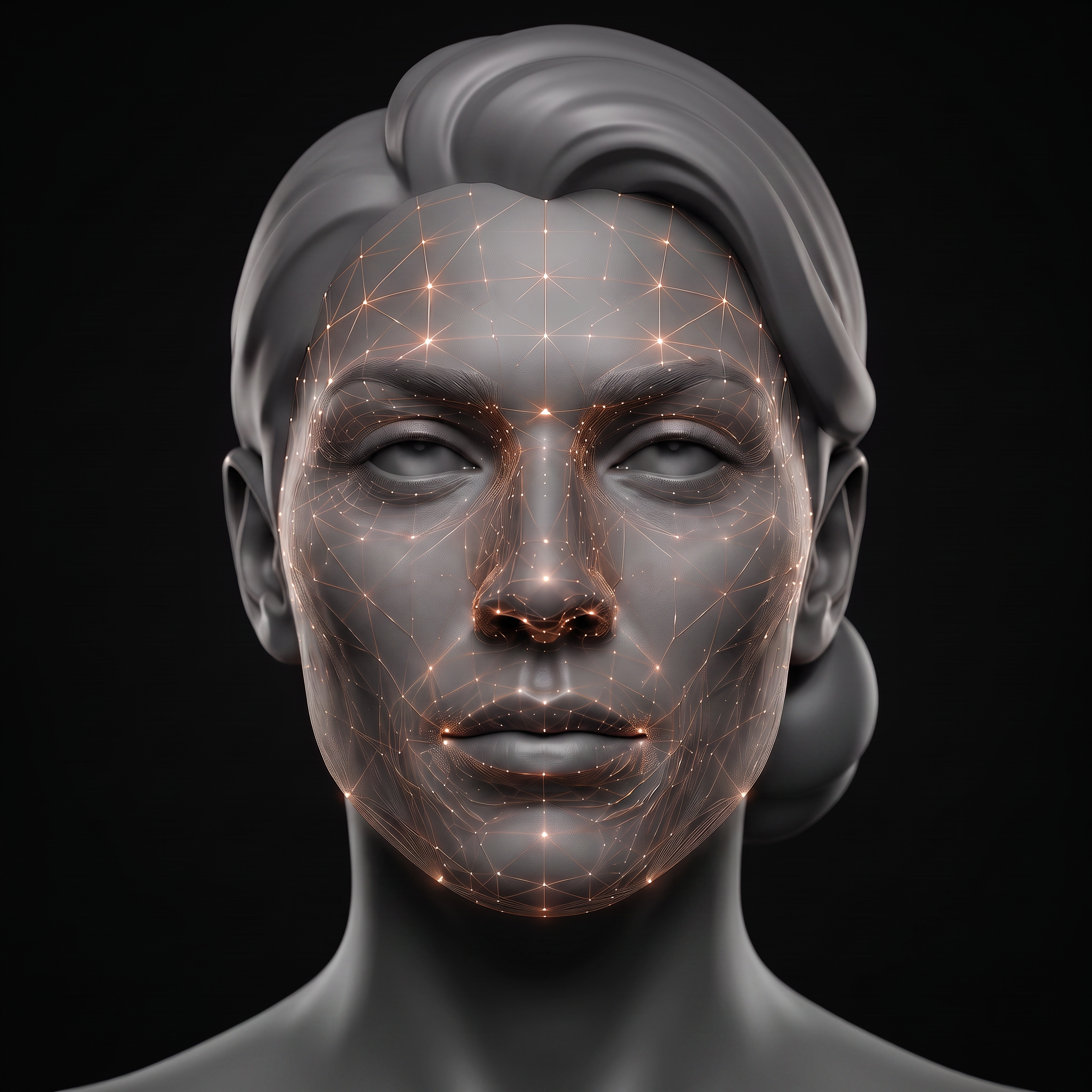
478 landmarks
During free scans, your photo stays on your device and is not uploaded to our server. All analysis happens in your browser. We keep only anonymous numerical, non-identifiable measurements, never your photo. See our privacy promise.
Palpebral fissure width vs height
Eye aspect ratio test: what shape are your eyes?
Eye shape is largely defined by the palpebral fissure, the visible opening between your upper and lower eyelids, and specifically by the relationship between its width and its height. This free calculator uses an AI face scan to measure both dimensions from your iris and canthal landmarks and classifies the resulting shape.
Free basic reports require no credit card, no account, no password. Your image is never uploaded or stored. Analysis happens in your browser and your session data is cleared when you close or refresh the page.
In short
The eye aspect ratio compares the width of the palpebral fissure, from inner to outer corner, against its height at the widest vertical point. A higher ratio reads as a narrower, more elongated eye shape, while a lower ratio reads as rounder.
- 3D landmarks
- 4783D landmarks
- Scan time
- ~20sScan time
- Uploads, runs in browser
- 0Uploads, runs in browser
- No account required
- FreeNo account required
Where it is measured
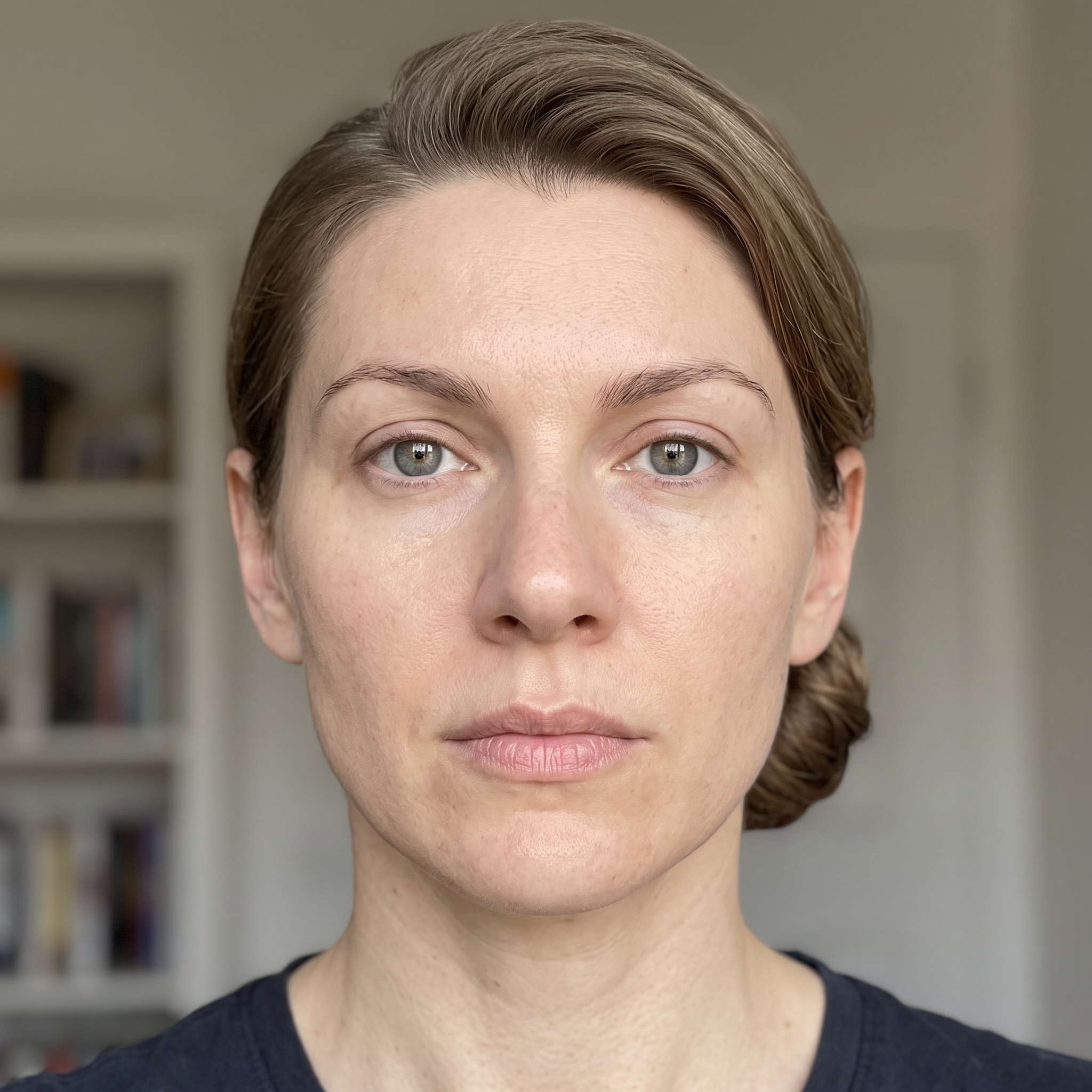
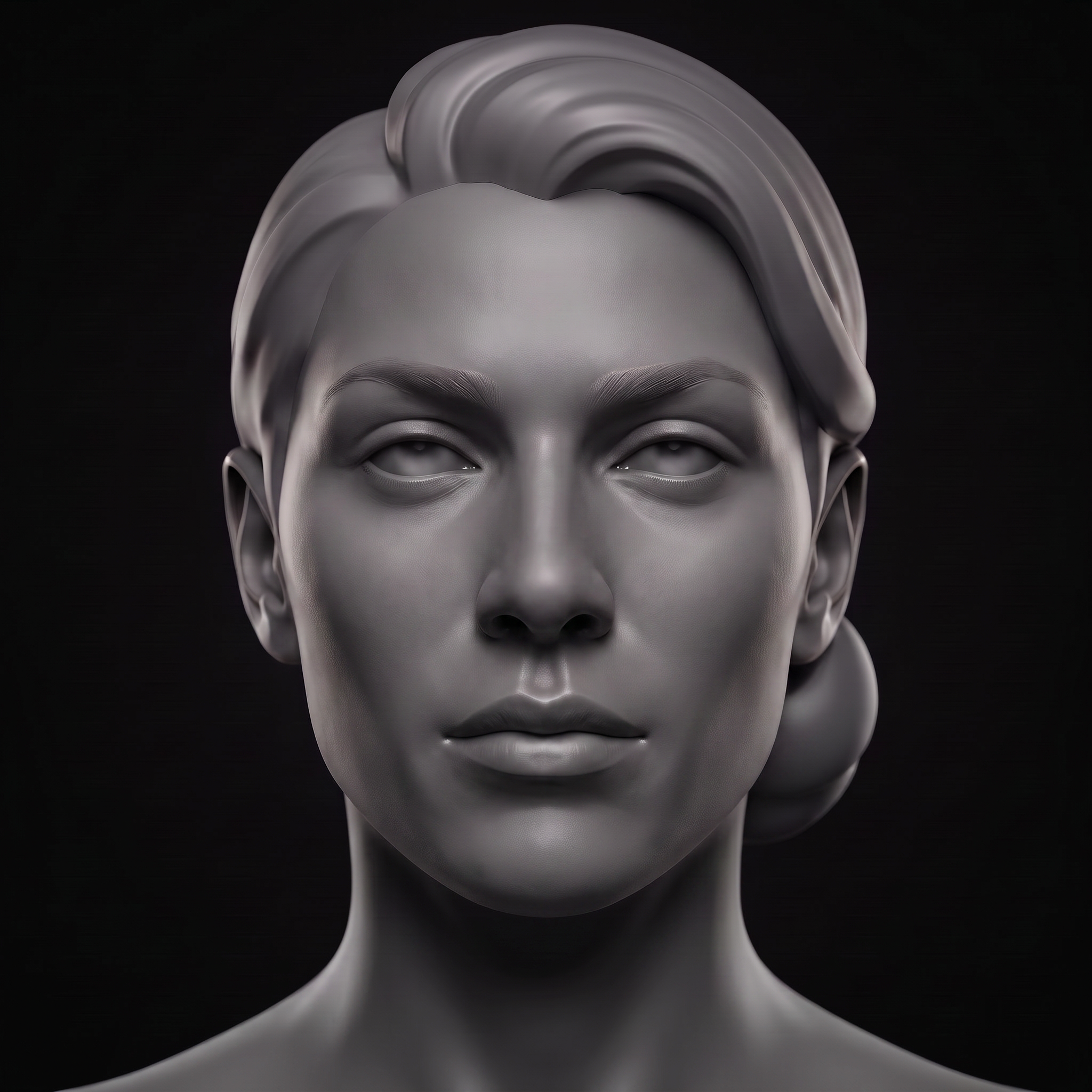
Eye aspect ratio on the landmark mesh.
The overlay is drawn from the same 478 point MediaPipe landmark set Facemap uses on your own scan, so every caliper, axis and node sits on the exact anatomy the measurement is taken from.
Sample reading, Palpebral fissure width vs height
- Fissure width
- 31.4 mm
- Fissure height
- 10.6 mm
- Aspect ratio
- 2.96
- Shape class
- Almond
How the scan works
Capture
Guided front-on frame with even light, no upload.
Landmark
478 point mesh placed on your face in real time.
Report
Eye aspect ratio measured, normalised and explained.
What is eye aspect ratio?
The palpebral fissure is the visible opening between the upper and lower eyelids when the eye is at rest. Its aspect ratio, width divided by height, is the primary measurement used to describe eye shape.
How Facemap measures eye aspect ratio
Facemap's landmark model includes dedicated iris and eyelid points, giving precise inner and outer canthus positions plus the upper and lower lid margins. The scan measures the horizontal width and vertical height of each eye separately and computes the ratio.
What the typical range looks like
There is no single correct eye aspect ratio, shape is a description rather than a score. Almond, round and narrow shapes each fall within recognised ranges, and the reading is most useful for understanding your own baseline shape rather than comparing against another face.
How to read your result
A higher width to height ratio typically reads as an almond or narrow shape, while a lower ratio reads as rounder with more visible vertical eye opening. The measurement is stable across expression as long as the eye is relaxed and not widened or squinted.
The eye aspect ratio formula: how we calculate it
Eye openness, palpebral height against width. Landmark numbers are MediaPipe Face Landmarker indices, and every distance is normalised to your own face so camera distance and image size cancel out.
mean( dist(159, 145) / dist(33, 133), dist(386, 374) / dist(263, 362) )
- Landmarks used
- 33, 133, 145, 159, 263, 362, 374, 386
- Reference target
- 0.33
- Tolerance band
- 0.12
Your reading is compared with that published reference on a Gaussian match curve: score = round( 100 x exp( -0.5 x ( (reading - target) / tolerance )^2 ) ), clamped to 1 to 99. Basis for the reference value: typical open-eye aperture ratio in front-facing photography. The headline Attractiveness Score works differently: all readings are corrected for head angle and expression, weighted by confidence and mapped onto a 1 to 100 scale by a model calibrated against a published research set of more than Facemap scans.
Read the full Facemap methodology, including how the 22 measurement categories combine into your Attractiveness Score.
Eye aspect ratio reference table
Eye aspect ratio bands and how each one reads.
- Above 3.2Narrow
Width considerably exceeds vertical opening
- 2.6 to 3.2Almond
Classic elongated shape with moderate opening
- 2.0 to 2.5Balanced
Moderate width to height relationship
- Below 2.0Round
Vertical opening close to horizontal width
How eye shape is classified from landmarks
Eye shape terminology, almond, round, narrow, hooded, is descriptive rather than clinical, but it maps reasonably well onto the aspect ratio once eyelid position is accounted for.
- Width is measured from the medial to the lateral canthus
- Height is measured at the widest point of the vertical opening
- Iris landmarks help confirm the eye is relaxed, not widened or squinting
- Left and right eyes are measured and reported separately
What affects your eye aspect ratio
The ratio is shaped by fixed anatomical structure rather than anything you can change through expression.
- Orbital bone shape and eyelid skin coverage
- Natural fissure width, which is largely genetic
- Eyelid position at rest, including any hooding
- Minor day-to-day variation from tiredness or puffiness
Getting a consistent eye shape reading
Keep your eyes at a natural, relaxed opening, neither wide nor squinted, and look directly at the camera so both irises are fully visible. Even lighting across the eye area helps the model place eyelid margins precisely, and removing glasses avoids reflections that can obscure the canthal landmarks.
The eye aspect ratio formula, step by step
The eye aspect ratio uses a simple formula: eye height divided by eye width. Facemap's calculator runs this for each eye separately, but the underlying arithmetic is easy to follow.
- Find the inner corner, or medial canthus, and the outer corner, or lateral canthus
- Measure the horizontal distance between them, the eye width
- Find the highest point of the upper lid margin and the lowest point of the lower lid margin
- Measure the vertical distance between them, the eye height
- Divide eye height by eye width, or invert it, depending on which reading you want to compare
Your reading
Measure your eye aspect ratio in about twenty seconds.
The scan runs in your browser. Nothing is uploaded, and free basic reports need no account.
Questions
Eye shape test: frequently asked questions
What is a normal eye aspect ratio?
Most measured eyes fall between roughly 2.0 and 3.2, with almond shapes typically sitting in the middle to upper part of that range. There is no single normal value.
Can my eye aspect ratio change?
The underlying bone and eyelid structure is stable, though tiredness, puffiness or squinting can shift a single reading slightly.
What is the formula behind the eye aspect ratio calculator?
Eye width, measured from the inner to the outer corner, divided into the eye height, measured at the widest point of the vertical opening. Facemap reports this for each eye separately.
How accurate is the AI face scan for eye shape?
It uses Google's MediaPipe Face Mesh, a machine learning model that runs in your browser with 478 3D landmarks. Nothing is uploaded, and the eye aspect ratio is a fixed geometric calculation rather than a subjective read.
Is almond eye shape better than round?
No shape is objectively better, eye shape is a description of structure, not a quality score.
Are both eyes measured separately?
Yes. Facemap reports width, height and aspect ratio for the left and right eye independently, so you can see any difference between them.
Does the scan need me to create an account?
No. The free scan runs on-device with no account required, and images are cleared when you leave the page.
Related tools
Measurements that read alongside eye aspect ratio.
Eye-axis inclination angle
Canthal tilt face scan
The upward or downward angle of the eye's outer corner relative to its inner corner, measured from the same 3D landmark set.
Intercanthal distance ratio
Eye spacing face scan
The distance between the inner eye corners relative to the width of a single eye, a proportion that helps describe overall facial spacing.
Left vs right palpebral aperture
Eye size symmetry face scan
We compare the visible area and height of the left and right eye openings, the palpebral apertures, to check how closely they match in size.
Every tool