Start your free facial thirds measurement scan
Full resolution
478 landmarks
During free scans, your photo stays on your device and is not uploaded to our server. All analysis happens in your browser. We keep only anonymous numerical, non-identifiable measurements, never your photo. See our privacy promise.
Vertical proportion balance
Facial thirds test: measure your vertical face proportions
The rule of thirds divides a face into three vertical zones of ideally similar height. This free facial thirds calculator is an AI face scan that measures each zone directly and shows exactly where your proportions concentrate.
Free basic reports require no credit card, no account, no password. Your image is never uploaded or stored. Analysis happens in your browser and your session data is cleared when you close or refresh the page.
In short
The facial thirds test divides your face into upper, middle and lower thirds: hairline to brow, brow to nose base, and nose base to chin. Facemap measures each span from 478 landmarks and reports it as a percentage of total face height, so the three sum to 100.
- 3D landmarks
- 4783D landmarks
- Scan time
- ~20sScan time
- Uploads, runs in browser
- 0Uploads, runs in browser
- No account required
- FreeNo account required
Where it is measured
Facial thirds on the landmark mesh.
The overlay is drawn from the same 478 point MediaPipe landmark set Facemap uses on your own scan, so every caliper, axis and node sits on the exact anatomy the measurement is taken from.
Sample reading, Vertical proportion balance
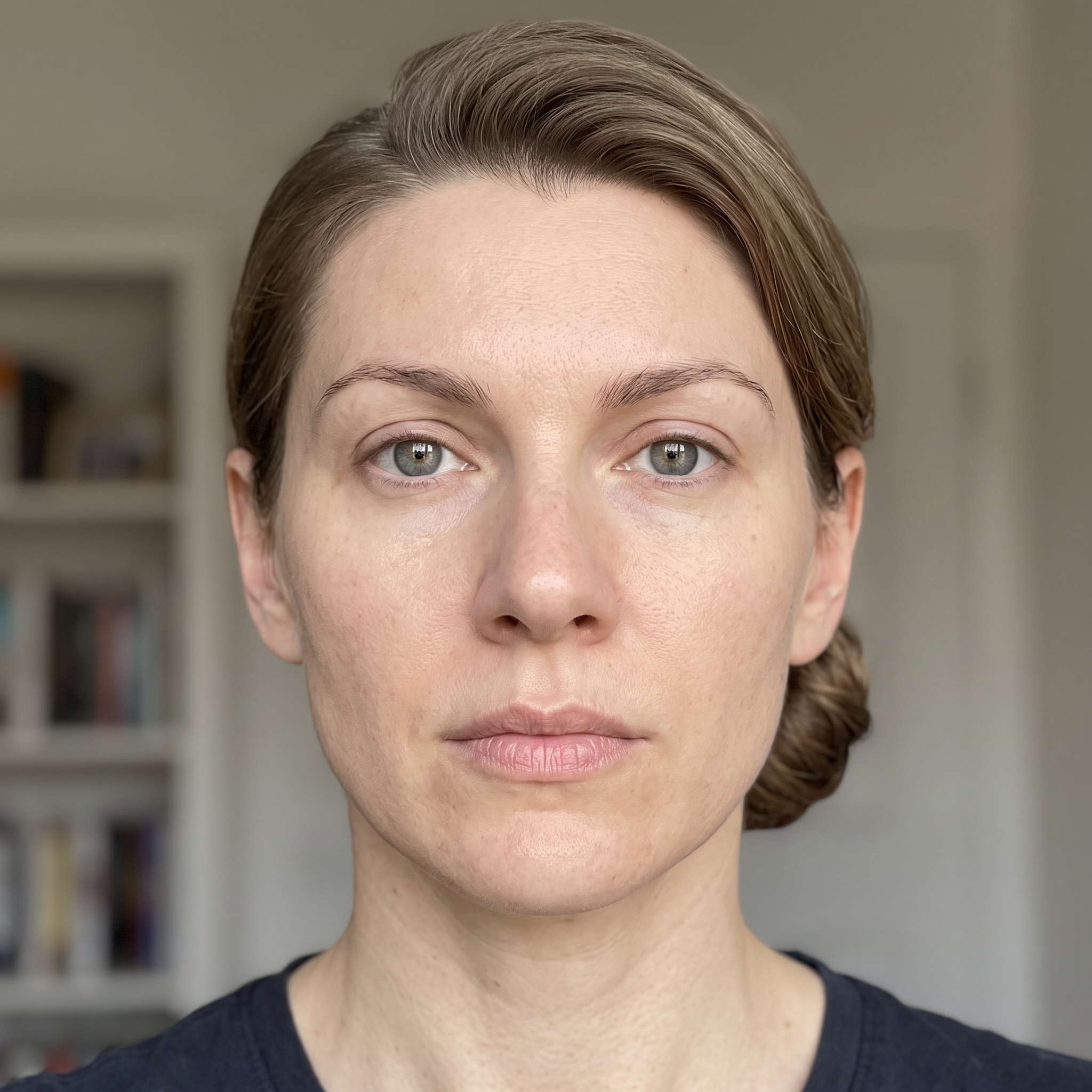
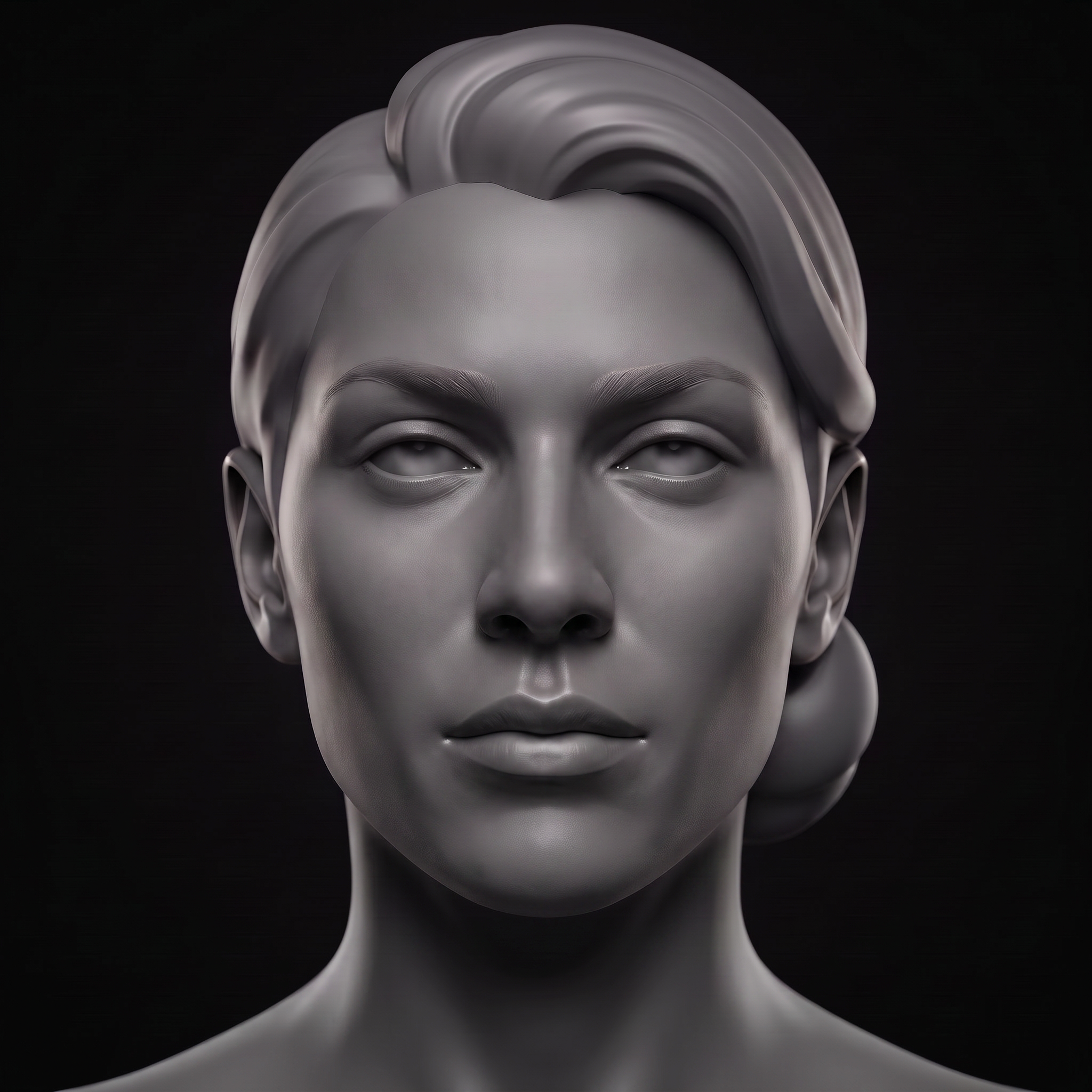
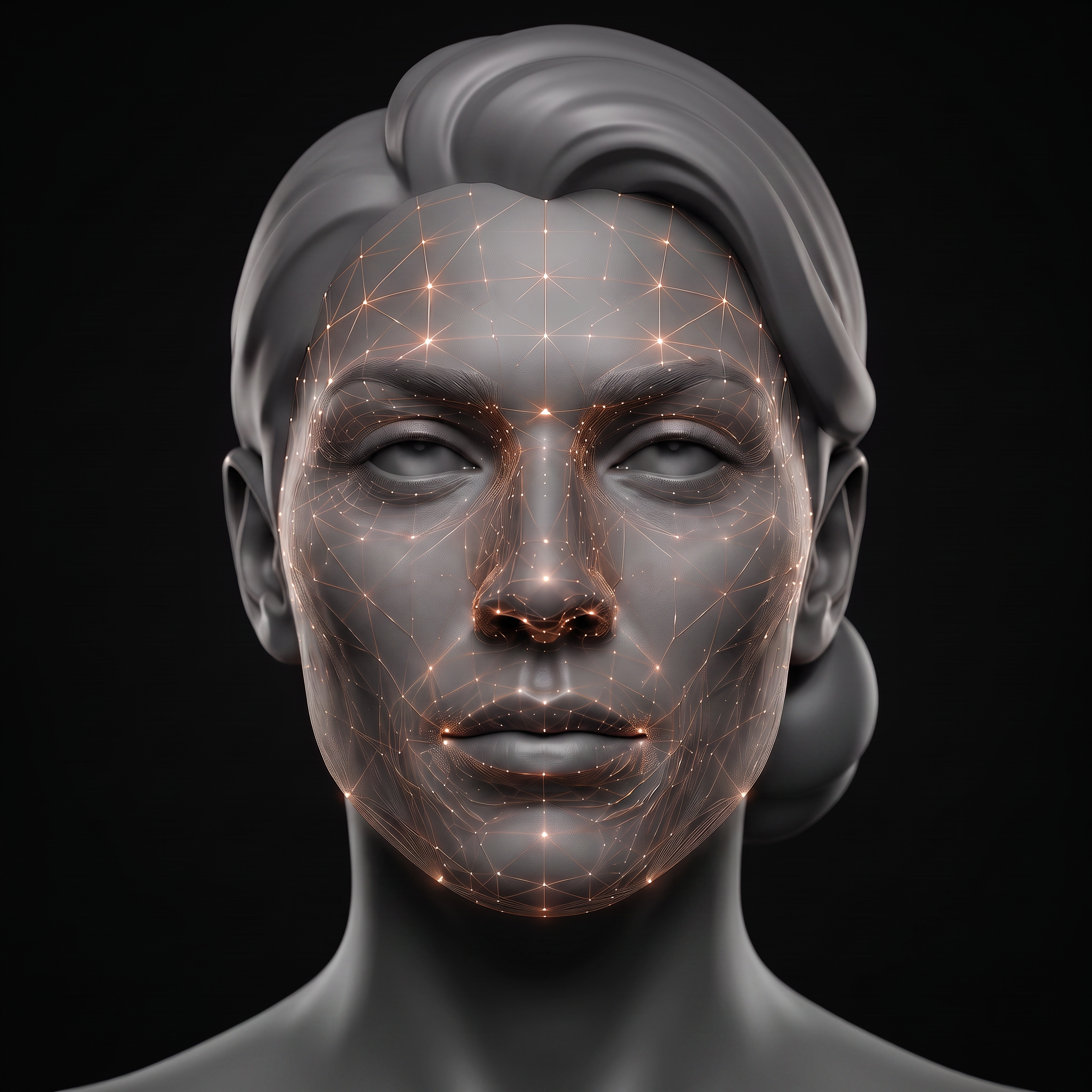
- Upper third
- 33.4%
- Middle third
- 32.1%
- Lower third
- 34.5%
- Max deviation
- 1.4%
How the scan works
Capture
Guided front-on frame with even light, no upload.
Landmark
478 point mesh placed on your face in real time.
Report
Facial thirds measured, normalised and explained.
What is facial thirds?
Three vertical spans: hairline to brow line, brow line to the base of the nose, and nose base to the bottom of the chin.
How Facemap measures facial thirds
Each boundary is taken from mesh landmarks, and the three spans are expressed as percentages of total face height so they sum to one hundred.
What the typical range looks like
Evenly distributed thirds are a classical reference point, not a requirement. A longer lower third, for example, is a common and often striking structural signature.
How to read your result
Because the hairline is variable and can be obscured, Facemap flags low-confidence upper-third readings rather than reporting a number you cannot trust.
The facial thirds formula: how we calculate it
Evenness of the three vertical thirds. Landmark numbers are MediaPipe Face Landmarker indices, and every distance is normalised to your own face so camera distance and image size cancel out.
standard deviation of the three thirds / their mean
- Landmarks used
- 10, 9, 2, 152
- Reference target
- 0, perfectly even thirds
- Tolerance band
- 0.22
Your reading is compared with that published reference on a Gaussian match curve: score = round( 100 x exp( -0.5 x ( (reading - target) / tolerance )^2 ) ), clamped to 1 to 99. Basis for the reference value: published reference range for vertical facial divisions. The headline Attractiveness Score works differently: all readings are corrected for head angle and expression, weighted by confidence and mapped onto a 1 to 100 scale by a model calibrated against a published research set of more than Facemap scans.
Read the full Facemap methodology, including how the 22 measurement categories combine into your Attractiveness Score.
Facial thirds reference table
How each third is expressed and what it means.
- Upper thirdHairline to brow
Most variable, hairline dependent
- Middle thirdBrow to nose base
The most stable of the three
- Lower thirdNose base to chin
Drives how the jaw and mouth read
- Even split33% each
Classical reference, not a requirement
What a long lower third means
A lower third above roughly 35 percent of face height lengthens the face and gives the jaw and chin more visual weight. It is one of the most common departures from even thirds and it appears constantly in faces regarded as photogenic. Facemap pairs it with your gonial angle so you can see whether length or angle is doing the work.
Why the upper third is the hardest to measure
The brow and nose base are precise landmarks. The hairline is not.
- Hairlines recede, and the boundary is soft rather than sharp
- Fringes and hairstyles hide the landmark entirely
- Head coverings make the reading impossible
- Facemap flags low confidence instead of guessing
Facial thirds and facial fifths
Thirds describe vertical proportion, and the horizontal equivalent, facial fifths, is covered by the eye spacing and midface ratio tools. Reading vertical and horizontal proportion together is the fastest way to understand whether a face reads as long, compact or balanced.
The facial thirds formula, step by step
The calculator turns three landmark boundaries into three simple percentages that always sum to one hundred.
- Mark the hairline, brow line, nose base and chin point on the 3D mesh
- Measure the vertical span from hairline to brow, brow to nose base, and nose base to chin
- Add the three spans together to get total face height
- Divide each span by total face height and multiply by 100
- Report the three percentages side by side
Your reading
Measure your facial thirds in about twenty seconds.
The scan runs in your browser. Nothing is uploaded, and free basic reports need no account.
Questions
Facial thirds test: frequently asked questions
What if my hairline is hidden?
The scan marks the upper third as low confidence and still reports the middle and lower thirds, which are measured from stable landmarks.
Are uneven thirds a problem?
No. They are a description of structure, and many widely admired faces measure unevenly.
What are ideal facial thirds?
The classical reference is three equal spans of about 33 percent each. Measured faces commonly vary by several points in each zone.
What does a short middle third mean?
A middle third below roughly 31 percent compresses the space between brow and nose, which usually reads as a compact midface. The midface ratio tool measures that directly.
Is the facial thirds test free?
Yes. The basic reading is free with no credit card, account or password.
What is the facial thirds formula?
Each vertical span, hairline to brow, brow to nose base, and nose base to chin, is divided by total face height and expressed as a percentage, so the three figures always add up to 100.
Is the facial thirds calculator an AI face scan?
Yes. It runs Google's MediaPipe Face Mesh machine learning model in your browser to place 478 3D landmarks, with no upload, so the percentages come from deterministic geometry rather than an opinion.
Related tools
Measurements that read alongside facial thirds.
Width-to-height compactness
Midface ratio face scan
The ratio of midfacial width to midfacial height, derived from cheekbone and nasal landmarks to describe central-face compactness.
Jawline structure index
Gonial angle face scan
The angle at the back of the jaw, where the lower border meets the posterior border, a core index of lower-face definition.
Every tool