Start your free interpupillary distance measurement scan
Full resolution
478 landmarks
During free scans, your photo stays on your device and is not uploaded to our server. All analysis happens in your browser. We keep only anonymous numerical, non-identifiable measurements, never your photo. See our privacy promise.
Pupil to pupil distance in millimetres
Interpupillary distance calculator: measure your PD in millimetres
Interpupillary distance, usually shortened to IPD or PD, is the distance between the centres of your two pupils. It matters for glasses fitting and appears often in facial proportion analysis. This free AI face scan calculator measures it in real millimetres directly from your camera feed.
Free basic reports require no credit card, no account, no password. Your image is never uploaded or stored. Analysis happens in your browser and your session data is cleared when you close or refresh the page.
In short
Interpupillary distance is the distance between the centres of your two pupils, typically between 54 and 68 millimetres in adults. Facemap measures it using MediaPipe's iris landmarks, calibrating pixels to millimetres from the iris's known average diameter of 11.7 millimetres.
- 3D landmarks
- 4783D landmarks
- Scan time
- ~20sScan time
- Uploads, runs in browser
- 0Uploads, runs in browser
- No account required
- FreeNo account required
Where it is measured
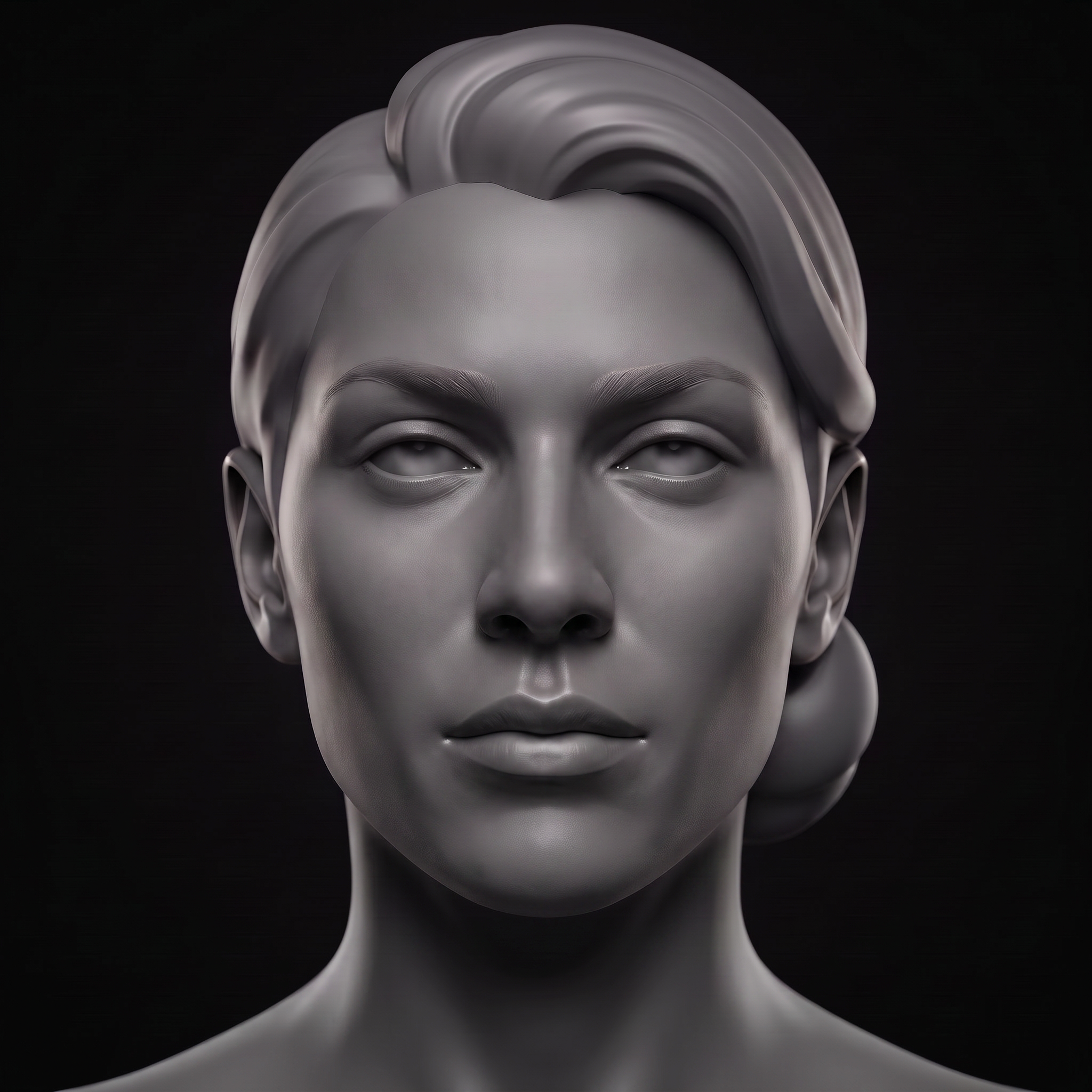
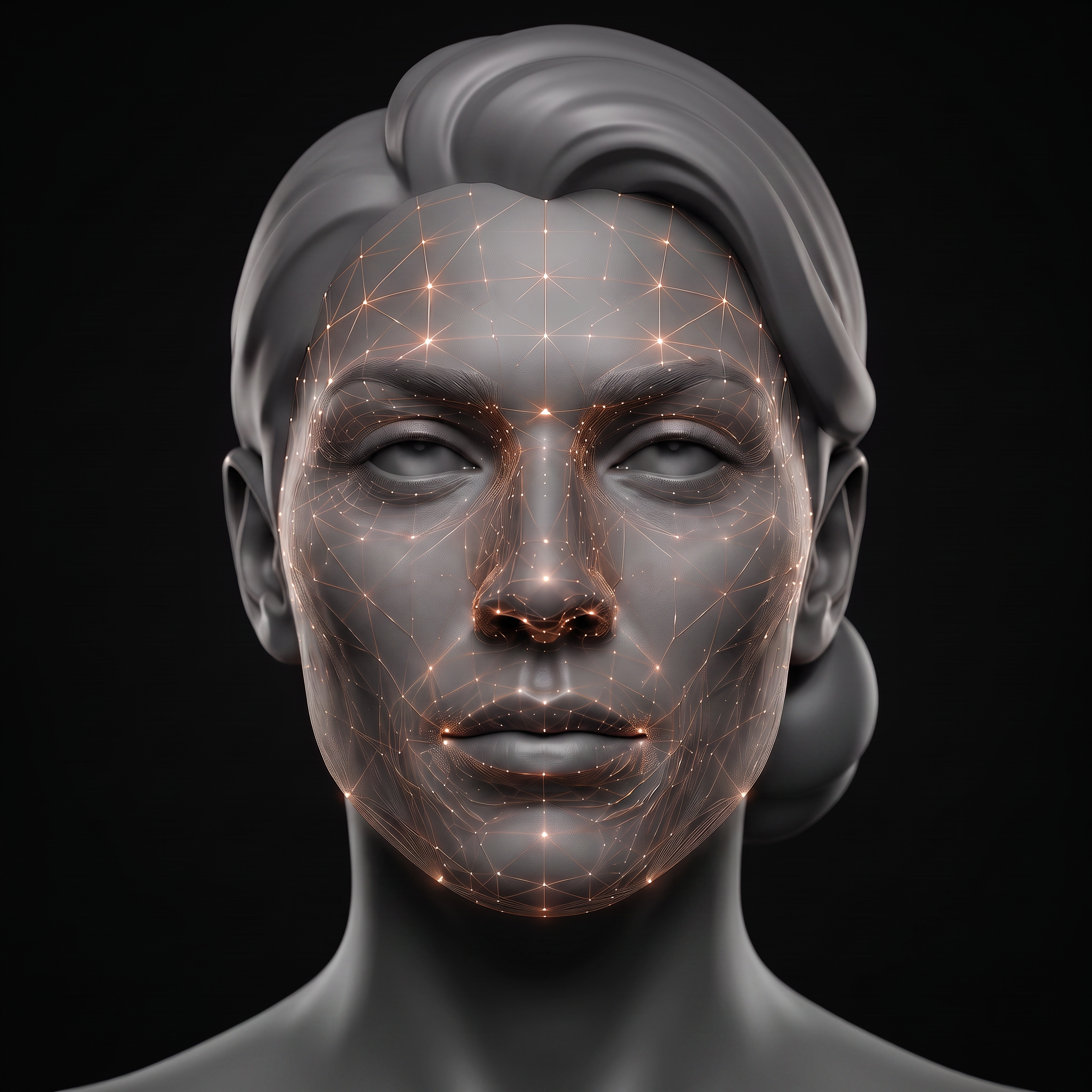
Interpupillary distance on the landmark mesh.
The overlay is drawn from the same 478 point MediaPipe landmark set Facemap uses on your own scan, so every caliper, axis and node sits on the exact anatomy the measurement is taken from.
Sample reading, Pupil to pupil distance in millimetres

- Iris reference
- 11.7 mm
- IPD
- 63.4 mm
- Left monocular
- 31.9 mm
- Right monocular
- 31.5 mm
How the scan works
Capture
Guided front-on frame with even light, no upload.
Landmark
478 point mesh placed on your face in real time.
Report
Interpupillary distance measured, normalised and explained.
What is interpupillary distance?
The straight-line distance between the centre of your left pupil and the centre of your right pupil, expressed in millimetres. It is a standard measurement used when fitting prescription lenses and is a stable anchor point in facial proportion work.
How Facemap measures interpupillary distance
This is the one measurement on Facemap reported in real-world millimetres rather than as a ratio, and the method is worth explaining plainly. MediaPipe Face Mesh includes dedicated iris landmarks, and the human iris has a famously consistent horizontal diameter of approximately 11.7 millimetres across adults, varying only slightly by individual. The scan measures your iris diameter in pixels, uses the 11.7 millimetre constant to derive a pixel-to-millimetre conversion factor for that exact frame, then applies the same factor to the pixel distance between your two pupil centres. Because the calibration is recomputed from your own iris in every frame, it self-corrects for how close you are sitting to the camera and for differences between devices.
What the typical range looks like
Adult interpupillary distance typically falls between 54 and 68 millimetres, with the average sitting close to 63 millimetres. There is no better or worse value, it is simply a fixed structural measurement used mainly for practical fitting purposes.
How to read your result
IPD is most useful as a stable reference distance rather than an aesthetic score. Once you have it in real millimetres, other Facemap measurements that are normally reported only as ratios, such as eye spacing, can in principle be cross-checked against a known physical scale.
The interpupillary distance formula: how we calculate it
Pupil separation as a fraction of your own bizygomatic width. Landmark numbers are MediaPipe Face Landmarker indices, and every distance is normalised to your own face so camera distance and image size cancel out.
dist(468, 473) / dist(234, 454)
- Landmarks used
- 468, 473 (iris centres), 234, 454
- Reference target
- 0.46
- Tolerance band
- 0.08
Your reading is compared with that published reference on a Gaussian match curve: score = round( 100 x exp( -0.5 x ( (reading - target) / tolerance )^2 ) ), clamped to 1 to 99. Basis for the reference value: adult interpupillary to face width ratios in anthropometric data. The headline Attractiveness Score works differently: all readings are corrected for head angle and expression, weighted by confidence and mapped onto a 1 to 100 scale by a model calibrated against a published research set of more than Facemap scans.
Read the full Facemap methodology, including how the 22 measurement categories combine into your Attractiveness Score.
Interpupillary distance reference table
Interpupillary distance bands in adults.
- Below 54 mmNarrow
Below the typical adult range
- 54 to 60 mmBelow average
Common in smaller facial frames
- 61 to 68 mmAverage to wide
The most commonly measured adult band
- Above 68 mmWide
Above the typical adult range
Why the iris is used to calibrate millimetre measurements
Camera images give you pixels, not millimetres, and pixel distances change with how close a face sits to the lens. The iris solves this because its horizontal diameter is remarkably consistent across adults, at roughly 11.7 millimetres, regardless of eye colour or overall face size. By measuring how many pixels your iris spans in a given frame, the scan derives an exact millimetre-per-pixel value for that frame and applies it to any other distance measured in the same image, including your pupil to pupil distance.
Interpupillary distance and glasses fitting
Opticians use PD to centre lenses correctly over your pupils, since a lens optical centre placed away from the pupil introduces unwanted prismatic effect. Facemap's reading gives you a reference figure, but a dispensing optician's in-person measurement remains the appropriate source for an actual lens order.
Monocular PD and why Facemap reports a single figure
Some optical prescriptions ask for a monocular PD, the distance from each pupil to the centre of the nose bridge, measured separately per eye. Facemap currently reports total interpupillary distance as a single combined figure between the two pupil centres, which is the more commonly requested value for general facial measurement purposes.
The interpupillary distance formula, step by step
The IPD calculator converts a pixel measurement into millimetres using a single reliable constant: the known 11.7 millimetre average diameter of the human iris.
- Measure the horizontal diameter of one iris in pixels for the current frame
- Divide the known 11.7mm iris diameter by that pixel measurement to get a millimetres-per-pixel factor
- Measure the pixel distance between the centres of your two pupils
- Multiply that pupil to pupil pixel distance by the millimetres-per-pixel factor
- The result is your interpupillary distance in real millimetres
Your reading
Measure your interpupillary distance in about twenty seconds.
The scan runs in your browser. Nothing is uploaded, and free basic reports need no account.
Questions
IPD calculator: frequently asked questions
How accurate is an online interpupillary distance calculator?
Accuracy depends on landmark precision and calibration. Facemap calibrates every frame against the iris's known 11.7 millimetre diameter using MediaPipe's dedicated iris landmarks, which keeps the millimetre conversion consistent regardless of camera distance.
What is a normal interpupillary distance for adults?
Most adults measure between 54 and 68 millimetres, with an average close to 63 millimetres. Values outside this range are not unusual and are not a cause for concern on their own.
Can I use my IPD measurement to order glasses?
You can use it as a reference figure, but Facemap does not replace an in-person measurement from a dispensing optician for an actual prescription order.
Why does the scan use the iris instead of a coin or card for scale?
The iris is already on your face in every frame and its diameter barely varies between adults, so it gives a built-in scale reference without needing a second object held up to the camera.
Does IPD change with age?
Interpupillary distance is largely fixed by early adulthood and changes very little afterwards, unlike many soft tissue measurements elsewhere on the face.
What is the interpupillary distance formula?
Facemap divides the fixed 11.7 millimetre average iris diameter by your iris diameter in pixels to get a scale factor, then multiplies your pupil to pupil pixel distance by that factor to give millimetres.
How does the AI face scan measure IPD without a ruler?
Google's MediaPipe Face Mesh machine learning model runs in your browser and places 478 3D landmarks, including dedicated iris points. Nothing is uploaded, and the millimetre conversion is deterministic geometry rather than a guess.
Related tools
Measurements that read alongside interpupillary distance.
Intercanthal distance ratio
Eye spacing face scan
The distance between the inner eye corners relative to the width of a single eye, a proportion that helps describe overall facial spacing.
Bilateral landmark balance
Facial symmetry face scan
We compare 478 corresponding landmarks across the vertical midline of your face, region by region, to quantify how closely each side mirrors the other.
Palpebral fissure width vs height
Eye aspect ratio face scan
We measure the width and height of the visible eye opening, the palpebral fissure, and use the relationship between them to describe eye shape as almond, round or narrow.
Every tool