Start your free facial symmetry measurement scan
Full resolution
478 landmarks
During free scans, your photo stays on your device and is not uploaded to our server. All analysis happens in your browser. We keep only anonymous numerical, non-identifiable measurements, never your photo. See our privacy promise.
Bilateral landmark balance
Facial symmetry test: how symmetrical is my face?
Facial symmetry is the most requested facial measurement, and the most misunderstood. This free face symmetry calculator is an AI face scan that scores how closely the left and right halves of your face mirror each other, region by region, and explains what the number actually means.
Free basic reports require no credit card, no account, no password. Your image is never uploaded or stored. Analysis happens in your browser and your session data is cleared when you close or refresh the page.
In short
A facial symmetry test measures how closely paired features sit at matching distances from the midline of your face. Facemap places 478 3D landmarks, mirrors one half onto the other, and reports the residual difference per region as a symmetry score between 0 and 100.
- 3D landmarks
- 4783D landmarks
- Scan time
- ~20sScan time
- Uploads, runs in browser
- 0Uploads, runs in browser
- No account required
- FreeNo account required
Where it is measured
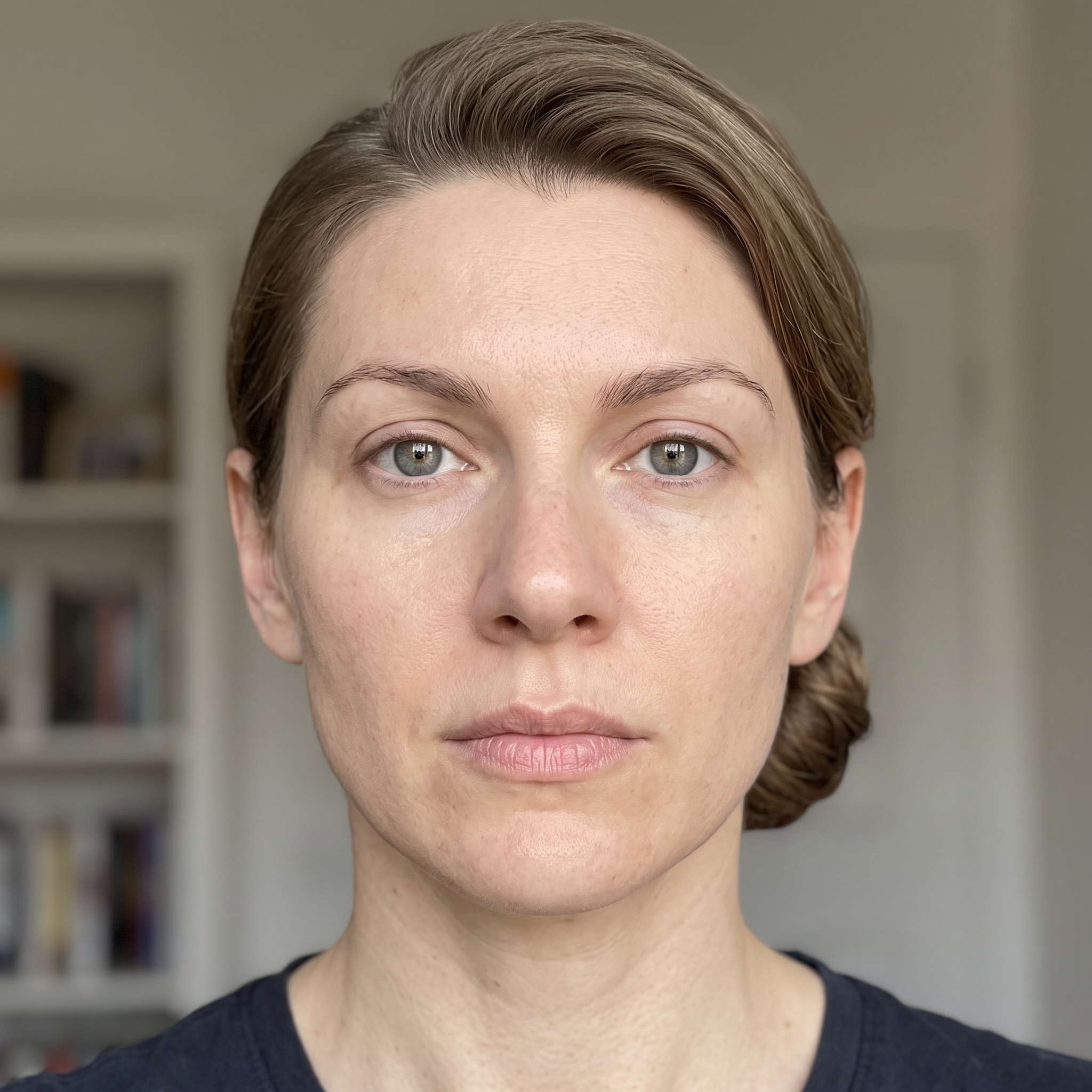
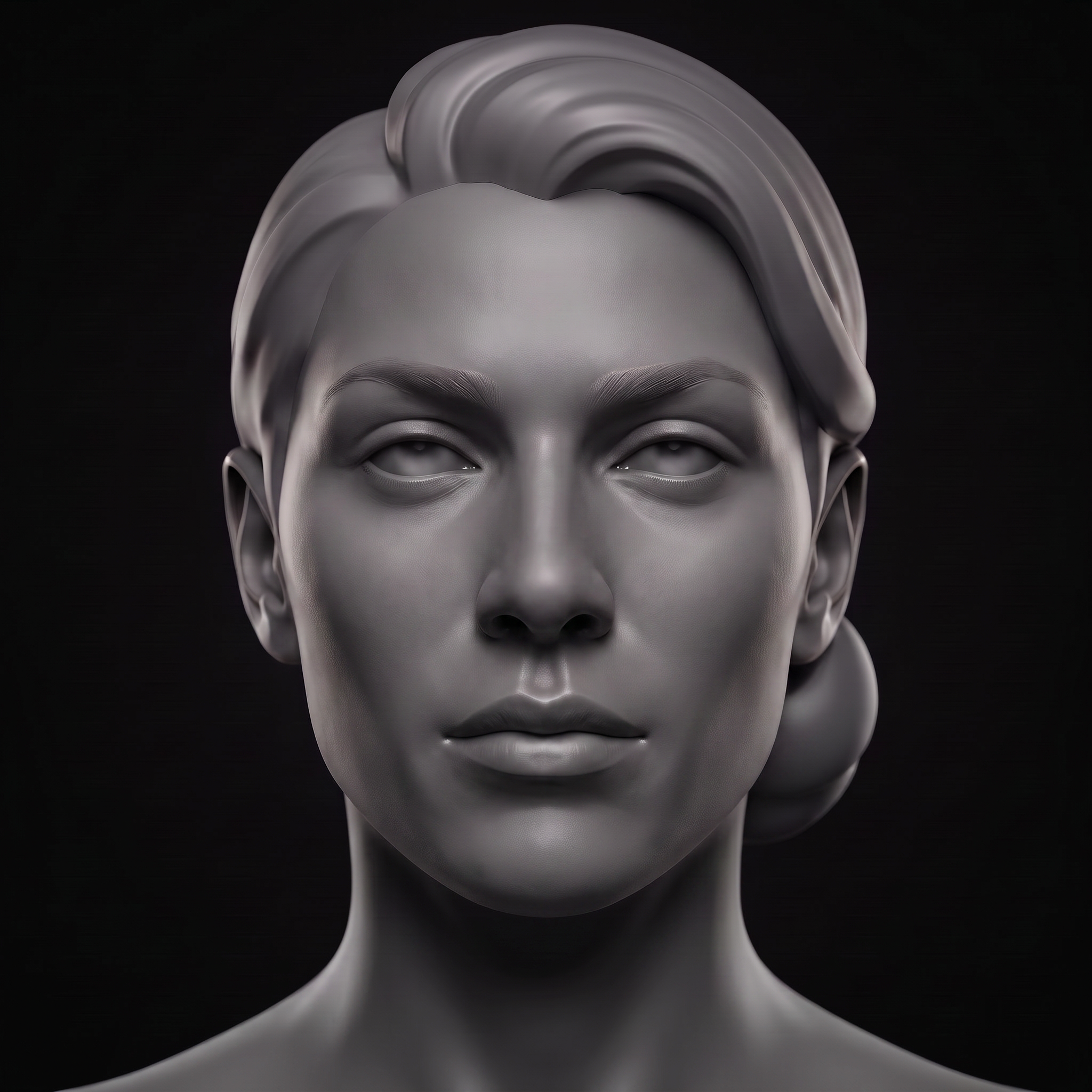
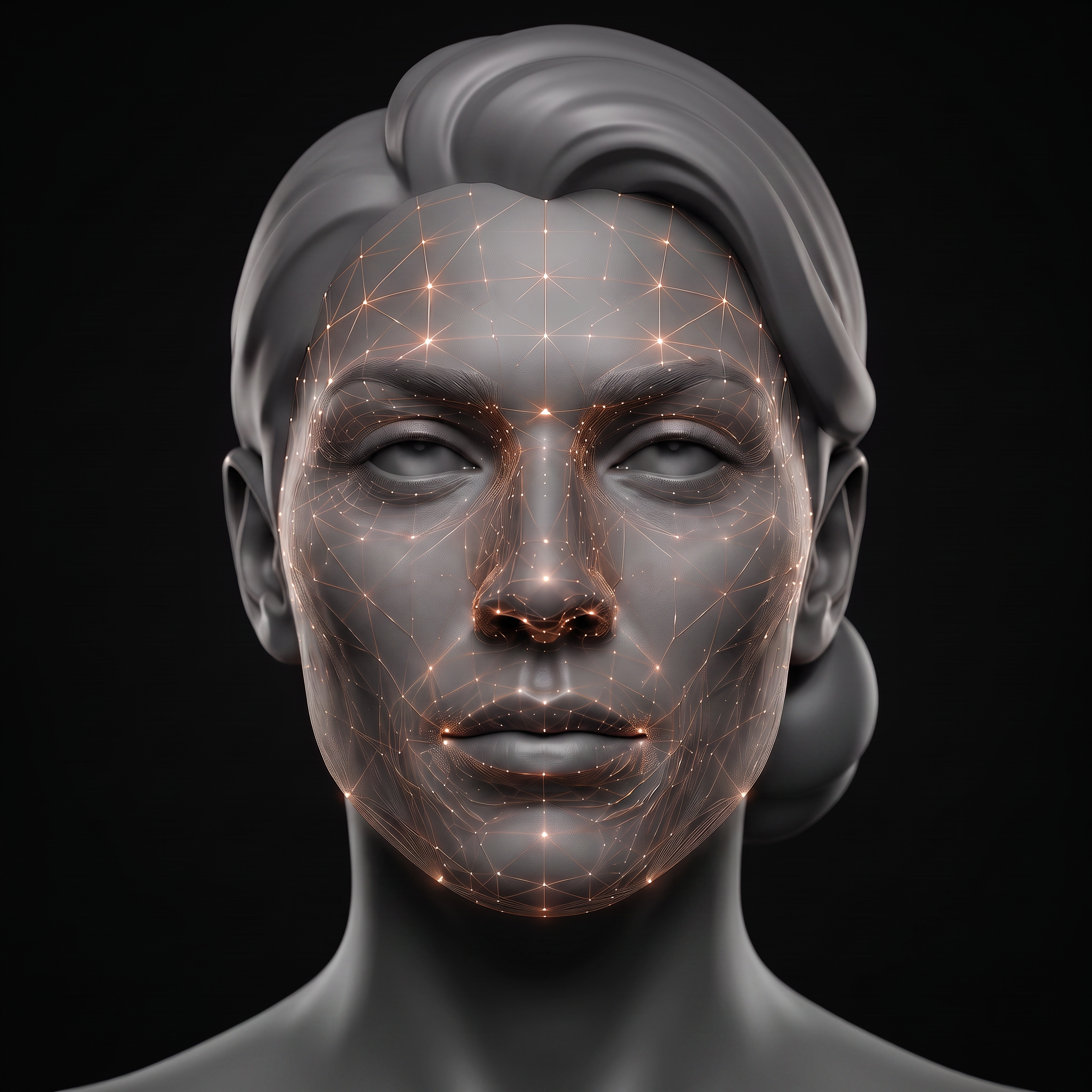
Symmetry on the landmark mesh.
The overlay is drawn from the same 478 point MediaPipe landmark set Facemap uses on your own scan, so every caliper, axis and node sits on the exact anatomy the measurement is taken from.
Sample reading, Bilateral landmark balance
- Midline deviation
- 0.42 mm
- Left / right delta
- 3.8%
- Symmetry index
- 96.2%
- Landmarks paired
- 232
How the scan works
Capture
Guided front-on frame with even light, no upload.
Landmark
478 point mesh placed on your face in real time.
Report
Symmetry measured, normalised and explained.
What is symmetry?
Bilateral symmetry describes how closely paired features, eyes, brows, cheekbones, nostrils and jaw corners, sit at matching distances from the vertical midline of your face.
How Facemap measures symmetry
The scan places 478 three-dimensional landmarks on your face, derives a best-fit midline from the stable central points, then mirrors one half onto the other. The residual distance between each landmark pair, normalised to your own face width, becomes the symmetry score.
What the typical range looks like
No face is perfectly symmetrical, and near-perfect symmetry reads as uncanny rather than attractive. Most measured faces fall within a narrow band of small deviations, and the useful signal is which region carries the difference, not the headline number.
How to read your result
Facemap reports symmetry per region, so you can see whether the difference sits in the brow line, the eye axis or the jaw. That is far more informative than a single percentage, and it is stable across repeat scans when lighting and angle are consistent.
The symmetry formula: how we calculate it
Mean mirrored-pair residual across the whole face. Landmark numbers are MediaPipe Face Landmarker indices, and every distance is normalised to your own face so camera distance and image size cancel out.
midline fitted from 24 mirrored midpoints, head turn removed by regressing the left-right offset difference on landmark depth, then mean hypot(lateral residual, vertical residual) / face width
- Landmarks used
- 24 mirrored pairs spanning eyes, brows, cheeks, nose, mouth and jaw
- Reference target
- 0
- Tolerance band
- 0.055
Your reading is compared with that published reference on a Gaussian match curve: score = round( 100 x exp( -0.5 x ( (reading - target) / tolerance )^2 ) ), clamped to 1 to 99. Basis for the reference value: residual asymmetry after perspective correction; no face measures zero. The headline Attractiveness Score works differently: all readings are corrected for head angle and expression, weighted by confidence and mapped onto a 1 to 100 scale by a model calibrated against a published research set of more than Facemap scans.
Read the full Facemap methodology, including how the 22 measurement categories combine into your Attractiveness Score.
Symmetry reference table
Symmetry score bands and how each one reads.
- 96 to 100Very high
Deviations below the visible threshold
- 90 to 95High
Typical of most measured faces
- 82 to 89Moderate
One region usually carries the difference
- Below 82Marked
Visible asymmetry, commonly jaw or brow
Which parts of the face are scored for symmetry?
The symmetrical face test does not return one blended number. Each region is scored separately so you can see where the difference actually sits.
- Brow line height and arch position
- Eye axis, paired with your canthal tilt reading
- Cheekbone projection and midface width
- Nasal base and alar width
- Mouth corner height and lip midline
- Jaw corners and chin point offset
How to get an accurate face symmetry reading
Head rotation is the single biggest source of false asymmetry. The capture step guides your position, and these conditions keep repeat scans comparable.
- Face the camera straight on with your chin level
- Use even, front-facing light with no strong side shadow
- Keep hair clear of your brows and jaw line
- Relax your mouth, no smile or jaw clench
- Remove glasses so canthal landmarks stay visible
Why perfect facial symmetry is not the goal
Studies that digitally perfect a face often produce a result observers rate as less appealing, not more. Small asymmetries carry character and are part of how a face is recognised. Facemap therefore reports symmetry as a description of structure and tracks change over time, rather than ranking you against anyone else.
The facial symmetry formula, step by step
The face symmetry calculator does not guess, it works through a fixed sequence of steps on the 478-point mesh, and every score comes from the same formula.
- Fit a best-fit vertical midline from stable central landmarks
- Mirror every landmark on one side across that midline
- Measure the residual distance between each mirrored point and its true partner
- Normalise each residual to your own face width
- Average the normalised residuals per region into a 0 to 100 score
Your reading
Measure your symmetry in about twenty seconds.
The scan runs in your browser. Nothing is uploaded, and free basic reports need no account.
Questions
Facial symmetry test: frequently asked questions
Is a facial symmetry calculator accurate?
Accuracy depends on the landmark model and on your capture conditions. Facemap uses Google's MediaPipe Face Mesh with 478 3D landmarks, and the capture step guides your angle and lighting so repeat scans stay comparable.
Does asymmetry mean something is wrong?
No. Mild asymmetry is universal and is part of what makes a face look human. Facemap describes structure, it does not diagnose anything.
What is a good face symmetry score?
Most measured faces score between 90 and 95. Anything above 96 is unusually even, and scores below 82 usually trace to a single region such as the jaw rather than the whole face.
Do I need to upload a photo to test my face symmetry?
No. The free scan runs entirely in your browser using your device camera, and the image is never uploaded to a server.
Why does my symmetry score change between scans?
Almost always head rotation or uneven lighting. Facing the camera squarely with flat front light keeps scores within a point or two of each other.
What is the facial symmetry formula?
Facemap mirrors each landmark across a best-fit midline, measures the leftover distance to its true partner, normalises that to your face width, and averages the result per region into a score out of 100.
Is this an AI face scan?
Yes. It runs Google's MediaPipe Face Mesh machine learning model directly in your browser to place 478 3D landmarks. Nothing is uploaded, and the result is deterministic geometry, not an opinion.
Related tools
Measurements that read alongside symmetry.
Eye-axis inclination angle
Canthal tilt face scan
The upward or downward angle of the eye's outer corner relative to its inner corner, measured from the same 3D landmark set.
Vertical proportion balance
Facial thirds face scan
The face is divided into three equal vertical zones: hairline to brow, brow to nose base, and nose base to chin. We measure how evenly your landmarks fall within each.
Jawline structure index
Gonial angle face scan
The angle at the back of the jaw, where the lower border meets the posterior border, a core index of lower-face definition.
Every tool