Start your free mouth to nose width measurement scan
Full resolution
478 landmarks
During free scans, your photo stays on your device and is not uploaded to our server. All analysis happens in your browser. We keep only anonymous numerical, non-identifiable measurements, never your photo. See our privacy promise.
Lip span vs alar width
Mouth to nose width ratio test: how do your lips compare to your nose?
The relationship between mouth width and nasal base width is one of the most cited proportions in facial aesthetics literature, often linked to the proportional balance. This free calculator uses an AI face scan to measure both widths directly from your landmarks and reports how close your face sits to the classical proportion.
Free basic reports require no credit card, no account, no password. Your image is never uploaded or stored. Analysis happens in your browser and your session data is cleared when you close or refresh the page.
In short
The mouth to nose width ratio compares the horizontal width of the mouth at rest against the width of the nose at the alar base. A frequently referenced target is close to 1.618, meaning the mouth reads roughly 1.6 times as wide as the nose.
- 3D landmarks
- 4783D landmarks
- Scan time
- ~20sScan time
- Uploads, runs in browser
- 0Uploads, runs in browser
- No account required
- FreeNo account required
Where it is measured
Mouth to nose width on the landmark mesh.
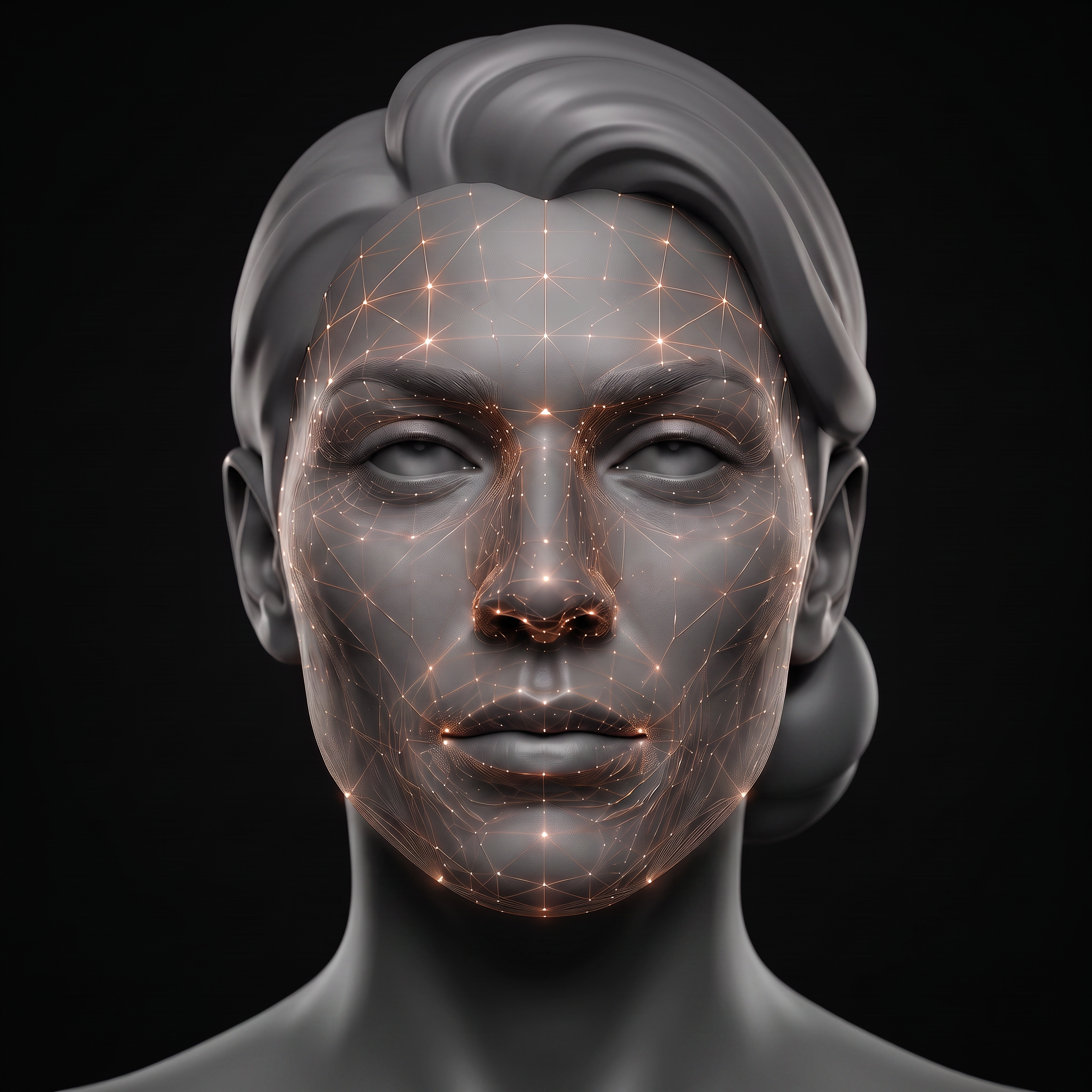
The overlay is drawn from the same 478 point MediaPipe landmark set Facemap uses on your own scan, so every caliper, axis and node sits on the exact anatomy the measurement is taken from.
Sample reading, Lip span vs alar width


- Mouth width
- 51.3 mm
- Alar width
- 34.2 mm
- Ratio
- 1.50
- Phi variance
- 7.3%
How the scan works
Capture
Guided front-on frame with even light, no upload.
Landmark
478 point mesh placed on your face in real time.
Report
Mouth to nose width measured, normalised and explained.
What is mouth to nose width?
Mouth width is the horizontal distance between the two mouth corners at rest. Alar width is the horizontal distance between the outermost points of the nostril wings. Their ratio is a long-referenced proportion in facial aesthetics.
How Facemap measures mouth to nose width
Facemap locates the left and right mouth corner landmarks and the left and right alar landmarks from the 3D face mesh, measures each horizontal span, then divides mouth width by alar width to produce the ratio.
What the typical range looks like
The classical reference figure sits close to 1.618, the proportional balance, though measured faces show a wide spread around this figure and no single value indicates better or worse structure. The ratio is most useful as a stable, repeatable reading rather than a score to optimise.
How to read your result
A ratio near 1.6 sits close to the classically cited proportion. Lower ratios indicate a narrower mouth relative to the nose, higher ratios indicate a wider mouth relative to the nose. Both patterns are common and interact closely with lip fullness and overall facial width.
The mouth to nose width formula: how we calculate it
Mouth width against alar base width. Landmark numbers are MediaPipe Face Landmarker indices, and every distance is normalised to your own face so camera distance and image size cancel out.
dist(61, 291) / dist(129, 358)
- Landmarks used
- 61, 291, 129, 358
- Reference target
- 1.55
- Tolerance band
- 0.32
Your reading is compared with that published reference on a Gaussian match curve: score = round( 100 x exp( -0.5 x ( (reading - target) / tolerance )^2 ) ), clamped to 1 to 99. Basis for the reference value: published reference range for mouth-to-nose proportions. The headline Attractiveness Score works differently: all readings are corrected for head angle and expression, weighted by confidence and mapped onto a 1 to 100 scale by a model calibrated against a published research set of more than Facemap scans.
Read the full Facemap methodology, including how the 22 measurement categories combine into your Attractiveness Score.
Mouth to nose width reference table
Mouth to nose width ratio bands and how each one reads.
- 1.55 to 1.68Classical range
Close to the commonly cited proportional balance target
- 1.69 to 1.85Wider mouth
Mouth reads noticeably wider than the nasal base
- 1.40 to 1.54Narrower mouth
Mouth width sits closer to alar width
- Below 1.40 or above 1.85Outside typical range
Less common spread between segments
Where the 1.618 reference comes from
Early facial aesthetics literature proposed that a mouth roughly 1.618 times the width of the nose reflects a historical reference point of proportion. Modern measurement studies show most faces vary considerably around this figure, so it is best treated as a reference point rather than a benchmark.
- The proportion is drawn from classical geometry, not a clinical standard
- Population studies show wide natural variation around 1.618
- Mouth width changes with expression, so resting position is measured
- Alar width is a stable landmark pair that does not shift with expression
What changes your mouth to nose width ratio
This ratio reflects several independent structural factors rather than one single trait.
- Underlying nasal cartilage and alar base width
- Natural mouth width and lip corner position at rest
- Overall facial width and midface proportion
- Ethnic and familial variation in nasal and lip structure
Getting an accurate mouth and nose reading
Keep your mouth relaxed and closed with no smile, as smiling widens the mouth corners and skews the ratio. Face the camera directly with even lighting across the nose and mouth, and avoid tilting your head, since rotation shortens one side of the measured width relative to the other.
The mouth to nose width formula, step by step
The mouth to nose width ratio uses a simple formula: mouth width divided by alar width. Facemap's calculator applies this automatically from your landmarks, but the steps behind it are straightforward.
- Find the left and right mouth corner landmarks at rest
- Measure the horizontal distance between the mouth corners, your mouth width
- Find the outermost point of each nostril wing, the alar landmarks
- Measure the horizontal distance between the alar points, your alar width
- Divide mouth width by alar width to get the ratio, commonly close to 1.6
Your reading
Measure your mouth to nose width in about twenty seconds.
The scan runs in your browser. Nothing is uploaded, and free basic reports need no account.
Questions
Mouth width test: frequently asked questions
What is the mouth to nose width ratio?
A frequently cited reference is close to 1.618, the proportional balance, though measured faces vary widely around this figure and there is no single correct value.
Does smiling affect this measurement?
Yes. Mouth width increases noticeably with a smile, so the scan measures your mouth at rest for a consistent reading.
What is the formula for the mouth to nose width ratio?
Mouth width divided by alar width. Facemap measures the horizontal span between the mouth corners and the horizontal span between the outer nostril points, then divides one by the other to produce the ratio.
How does the AI face scan measure mouth and nose width?
Google's MediaPipe Face Mesh, a machine learning model, runs in your browser and places 478 3D landmarks on your face. Nothing is uploaded, and the result is a deterministic geometric calculation rather than a judgement.
How is alar width measured?
Facemap identifies the outermost point of each nostril wing from the 3D face mesh and measures the horizontal distance between them.
Can this ratio change over time?
The underlying bone and cartilage widths are largely stable in adulthood, so repeat scans under consistent conditions should return similar results.
Is my data uploaded anywhere for this scan?
No. The scan runs entirely in your browser, no account is required, and captures are cleared when you leave the page.
Related tools
Measurements that read alongside mouth to nose width.
Upper-lower vermilion balance
Lip ratio face scan
We measure the relative height of the upper and lower vermilion, the pigmented part of the lips, to arrive at a clear upper-to-lower balance.
Alar width to nose height
Nasal index face scan
The nasal index compares the width of the nose at its widest point against its height, alongside how nose width relates to overall face width.
Every tool