Start your free lip fullness measurement scan
Full resolution
478 landmarks
During free scans, your photo stays on your device and is not uploaded to our server. All analysis happens in your browser. We keep only anonymous numerical, non-identifiable measurements, never your photo. See our privacy promise.
Vermilion height relative to face
Lip fullness test: how full are your lips?
Lip fullness is usually judged by eye, but it can be described precisely using the visible vermilion, the coloured part of the lip. This free lip size calculator runs an AI face scan to measure the height of your upper and lower lip relative to your face height and mouth width.
Free basic reports require no credit card, no account, no password. Your image is never uploaded or stored. Analysis happens in your browser and your session data is cleared when you close or refresh the page.
In short
A lip fullness test measures the vermilion height, the visible coloured portion of the upper and lower lip, and expresses it as a proportion of total face height and mouth width. Facemap reports both lips separately from 3D landmark data.
- 3D landmarks
- 4783D landmarks
- Scan time
- ~20sScan time
- Uploads, runs in browser
- 0Uploads, runs in browser
- No account required
- FreeNo account required
Where it is measured
Lip fullness on the landmark mesh.
The overlay is drawn from the same 478 point MediaPipe landmark set Facemap uses on your own scan, so every caliper, axis and node sits on the exact anatomy the measurement is taken from.
Sample reading, Vermilion height relative to face
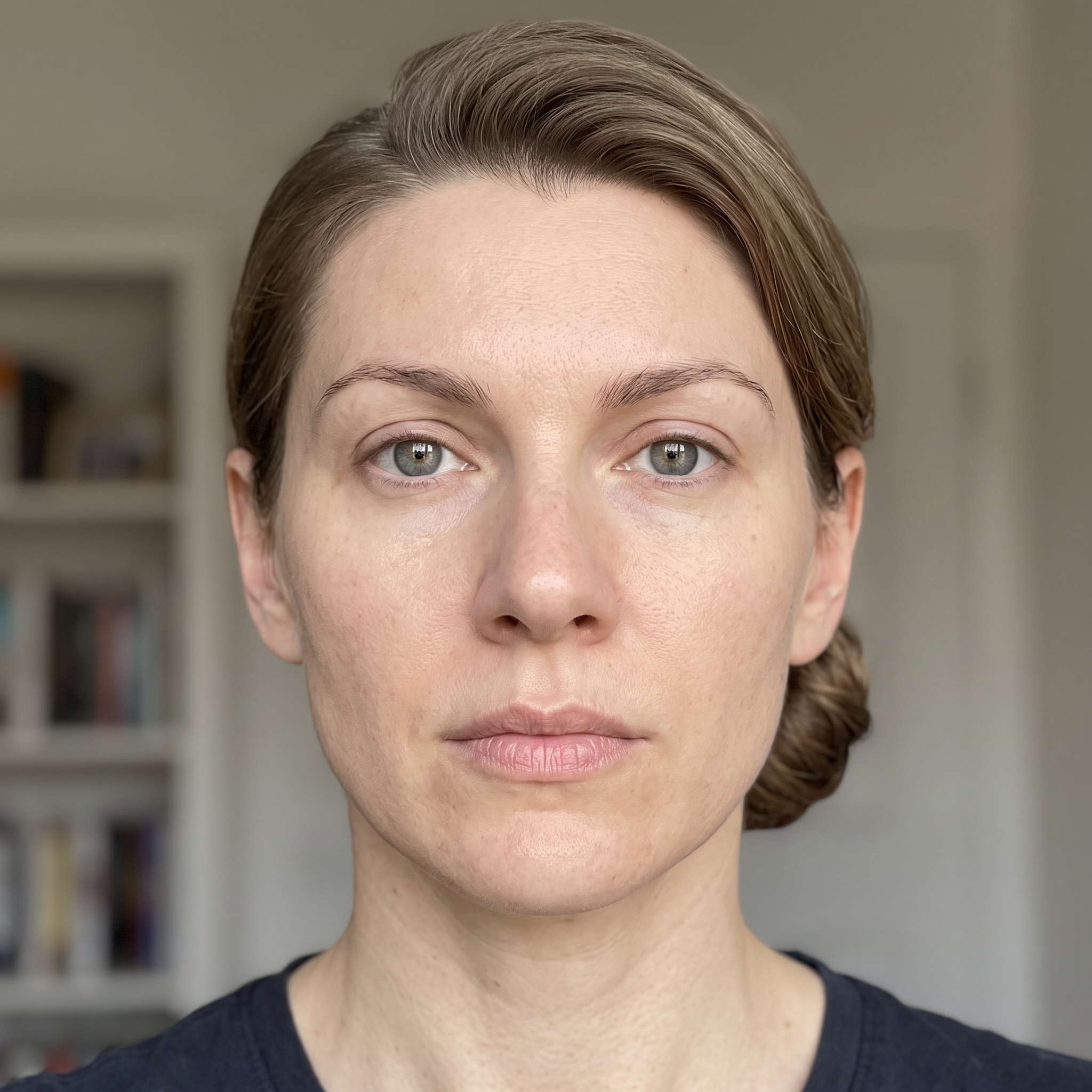
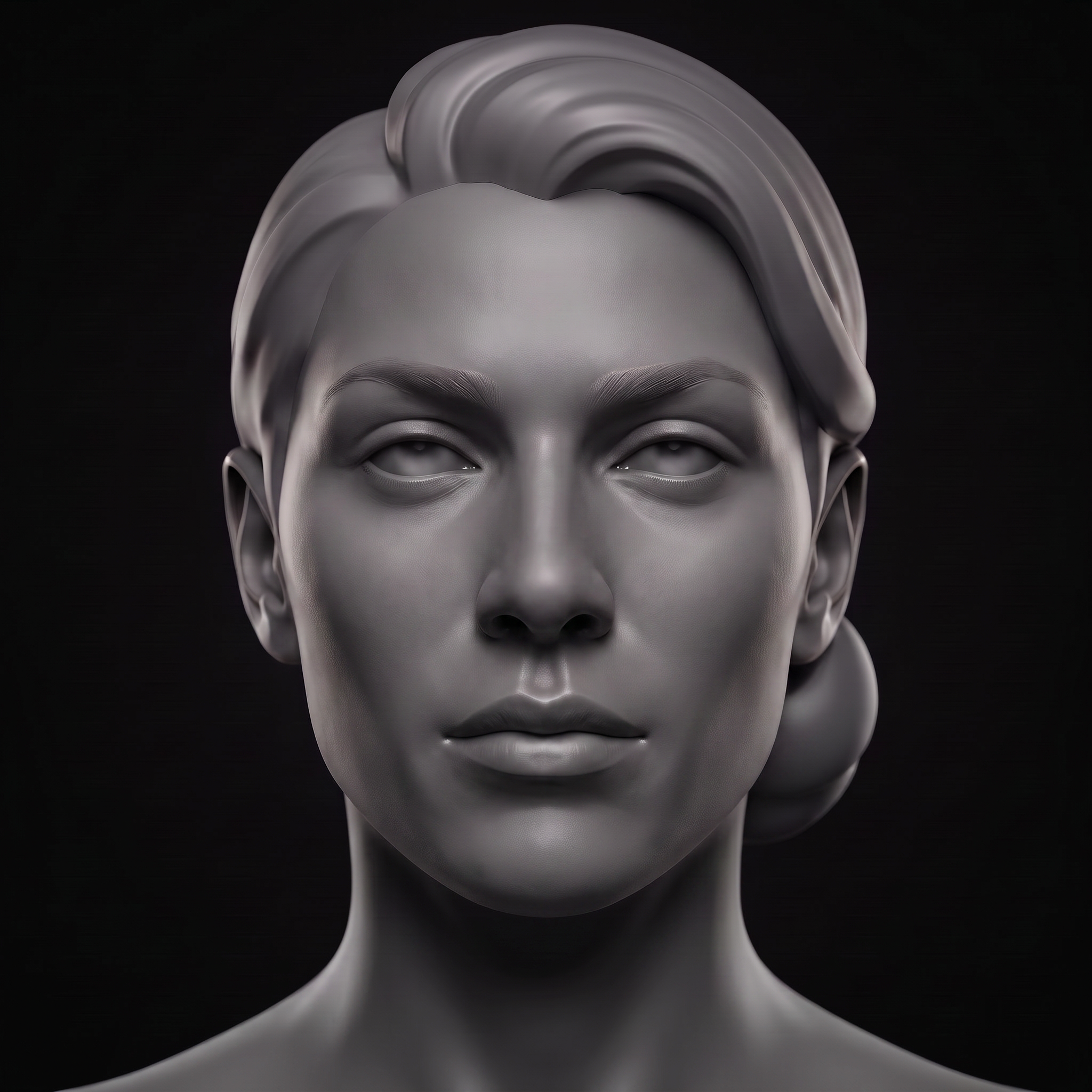
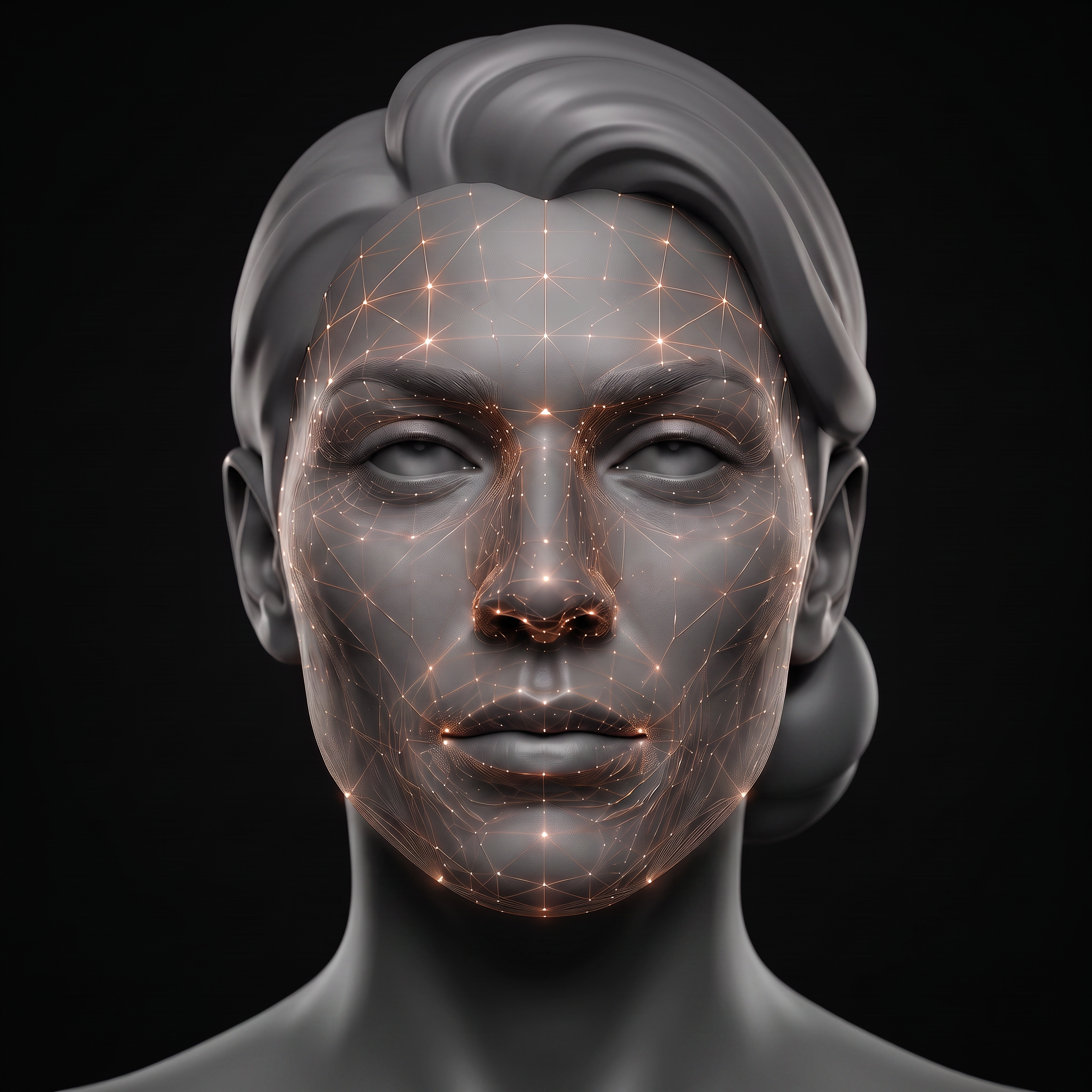
- Upper vermilion
- 8.2 mm
- Lower vermilion
- 12.9 mm
- Total / face height
- 0.072
- Range position
- Full
How the scan works
Capture
Guided front-on frame with even light, no upload.
Landmark
478 point mesh placed on your face in real time.
Report
Lip fullness measured, normalised and explained.
What is lip fullness?
Lip fullness describes the vermilion height, the visible height of the coloured lip tissue, for the upper and lower lip, considered relative to your overall face height and mouth width rather than in isolation.
How Facemap measures lip fullness
The mesh marks the upper lip line, the vermilion border and the lower lip margin. Facemap measures the vertical height of each lip separately, then expresses both as a percentage of total face height and of mouth corner-to-corner width.
What the typical range looks like
There is a wide range of lip proportions across faces that are considered balanced, and fullness reads differently depending on mouth width and the ratio between upper and lower lip. The figure is descriptive rather than a target to aim for.
How to read your result
Facemap reports upper and lower lip height separately because the ratio between them, not just total fullness, is often what people notice. A lower lip that is meaningfully fuller than the upper lip is a common and stable pattern, not an irregularity.
The lip fullness formula: how we calculate it
Combined vermilion height against mouth width. Landmark numbers are MediaPipe Face Landmarker indices, and every distance is normalised to your own face so camera distance and image size cancel out.
|y(17) - y(0)| / dist(61, 291)
- Landmarks used
- 0, 17, 61, 291
- Reference target
- 0.45
- Tolerance band
- 0.16
Your reading is compared with that published reference on a Gaussian match curve: score = round( 100 x exp( -0.5 x ( (reading - target) / tolerance )^2 ) ), clamped to 1 to 99. Basis for the reference value: vermilion height to mouth width proportions in aesthetic reference data. The headline Attractiveness Score works differently: all readings are corrected for head angle and expression, weighted by confidence and mapped onto a 1 to 100 scale by a model calibrated against a published research set of more than Facemap scans.
Read the full Facemap methodology, including how the 22 measurement categories combine into your Attractiveness Score.
Lip fullness reference table
Lip fullness bands and how each one reads.
- Below 8% of face heightSlim
Lower vermilion height relative to face
- 8 to 11%Moderate
Typical combined lip height
- 11 to 14%Full
Above average combined vermilion height
- Above 14%Very full
Notably prominent lip height
Upper lip versus lower lip proportion
Total fullness is only part of the picture. The ratio between upper and lower lip height changes how the mouth reads overall.
- Lower lip commonly measures fuller than the upper lip
- A near 1:1 ratio reads as more even and less common
- Upper lip height relates closely to philtrum length
- Mouth width affects how full a given vermilion height appears
- Lip fullness is independent of lip colour or texture
How to get an accurate lip fullness reading
Lip shape changes quickly with expression, so these conditions keep the scan consistent.
- Keep lips gently closed with no pressing or pursing
- Relax your jaw, avoid clenching or smiling
- Face the camera directly so both lip corners are visible
- Use even front light with no shadow beneath the lower lip
- Remove lip products that alter the visible vermilion edge
Why lip fullness is read alongside other proportions
A lip height reading means little without context. Facemap places it against mouth width and total face height so the figure reflects your own proportions rather than an absolute size, which varies enormously across otherwise balanced faces.
The lip fullness formula, step by step
The lip fullness calculator combines two vermilion heights and divides the total by mouth width, using landmark coordinates from the AI face scan rather than a photo estimate.
- Measure the upper lip vermilion height from landmark data
- Measure the lower lip vermilion height from landmark data
- Add the two heights together for a combined vermilion height
- Measure mouth width, corner to corner
- Divide combined vermilion height by mouth width for the fullness ratio
- Express the ratio as a percentage for easy comparison
Your reading
Measure your lip fullness in about twenty seconds.
The scan runs in your browser. Nothing is uploaded, and free basic reports need no account.
Questions
Lip fullness test: frequently asked questions
What counts as full lips?
There is no single threshold. Facemap reports vermilion height as a percentage of face height and mouth width, and fullness above roughly 11% of face height is generally described as full.
Is it normal for the lower lip to be fuller than the upper lip?
Yes. A fuller lower lip relative to the upper lip is the most common pattern and is not an irregularity.
How is lip fullness measured from a face scan?
Facemap places landmarks along the upper lip line, vermilion border and lower lip margin using MediaPipe Face Mesh, then measures the vertical height of each lip.
Can lip fullness change between scans?
Slightly, if lips are pursed, pressed or affected by hydration. A relaxed, closed mouth gives the most consistent reading.
Does the lip fullness test need a photo upload?
No. The scan runs on-device using your camera, and no image ever leaves your browser.
What formula does the lip fullness calculator use?
The calculator adds the upper and lower vermilion heights together, then divides that combined height by your mouth corner-to-corner width, giving a single proportion that reflects fullness relative to your own mouth size.
Is the lip fullness AI face scan just a guess?
No. The AI face scan uses Google's MediaPipe Face Mesh, a machine learning model that runs locally in your browser and places 478 3D landmarks on your face. Nothing is uploaded, and the fullness figure comes from deterministic geometry on those landmarks rather than an opinion.
Related tools
Measurements that read alongside lip fullness.
Upper-lower vermilion balance
Lip ratio face scan
We measure the relative height of the upper and lower vermilion, the pigmented part of the lips, to arrive at a clear upper-to-lower balance.
Lip span vs alar width
Mouth to nose width face scan
We compare the width of your mouth at rest against the width of your nose at the widest point of the alar base, the classical proportion long associated with facial harmony.
Lower-third proportion split
Chin to philtrum face scan
We split the lower third of your face into the philtrum, from the base of the nose to the upper lip, and the chin, from the lower lip to the chin point, then compare the two lengths.
Every tool