Start your free jawline definition measurement scan
Full resolution
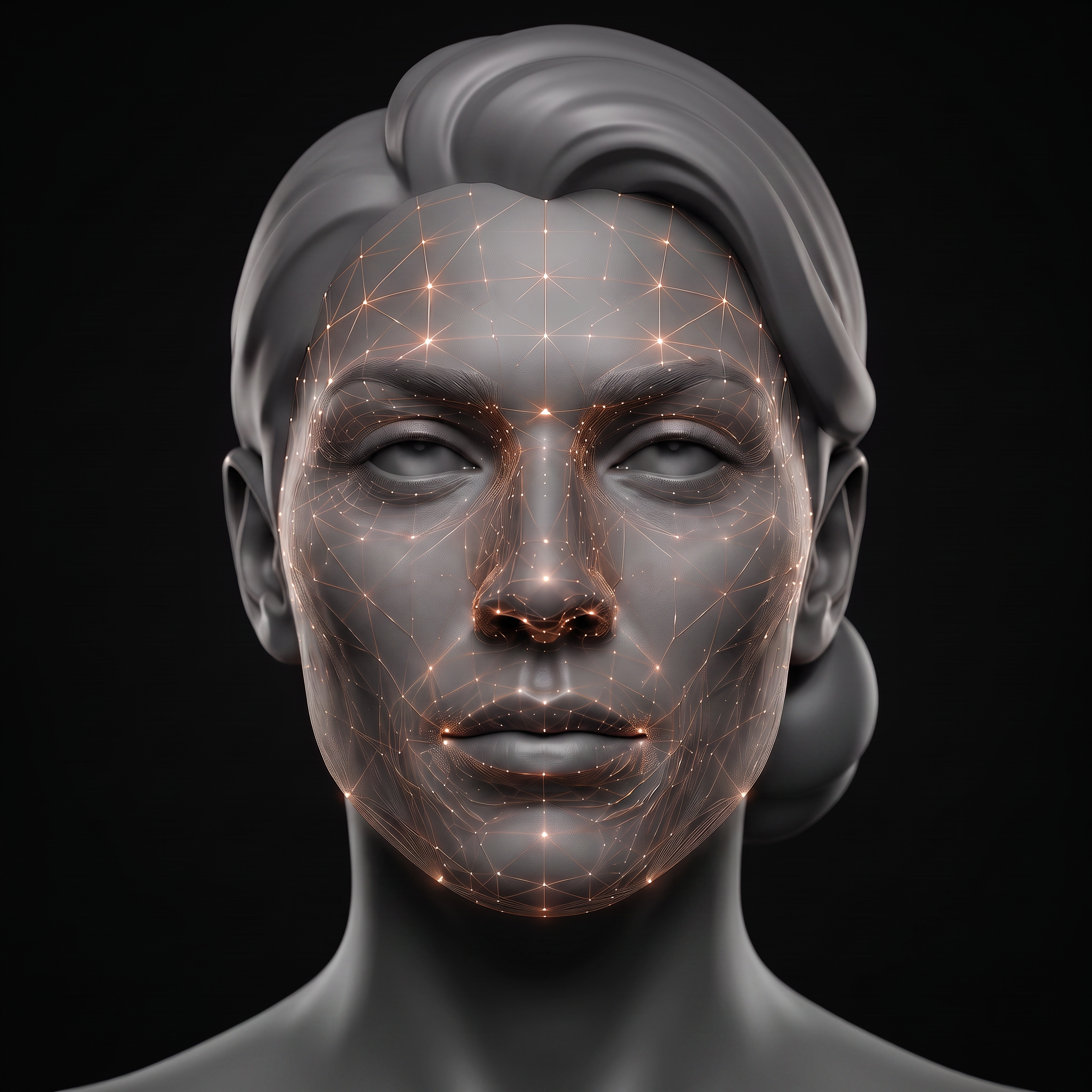
478 landmarks
During free scans, your photo stays on your device and is not uploaded to our server. All analysis happens in your browser. We keep only anonymous numerical, non-identifiable measurements, never your photo. See our privacy promise.
Jaw contour, width and symmetry
Jawline definition test: sharpness, width and symmetry
Jawline definition is one of the most searched facial measurements, and it is really four separate readings combined: how sharply the jaw contour is defined, how wide the jaw is at the jaw angle, how that width compares to your cheekbones, and how closely the left and right sides match. This free AI face scan reports all four.
Free basic reports require no credit card, no account, no password. Your image is never uploaded or stored. Analysis happens in your browser and your session data is cleared when you close or refresh the page.
In short
Jawline definition combines jaw contour sharpness, bigonial width, the jaw-to-cheek width ratio and left to right jaw symmetry. Facemap derives each from 478 facial landmarks and reports them separately, since a jaw can be wide but soft, or narrow but sharply defined.
- 3D landmarks
- 4783D landmarks
- Scan time
- ~20sScan time
- Uploads, runs in browser
- 0Uploads, runs in browser
- No account required
- FreeNo account required
Where it is measured
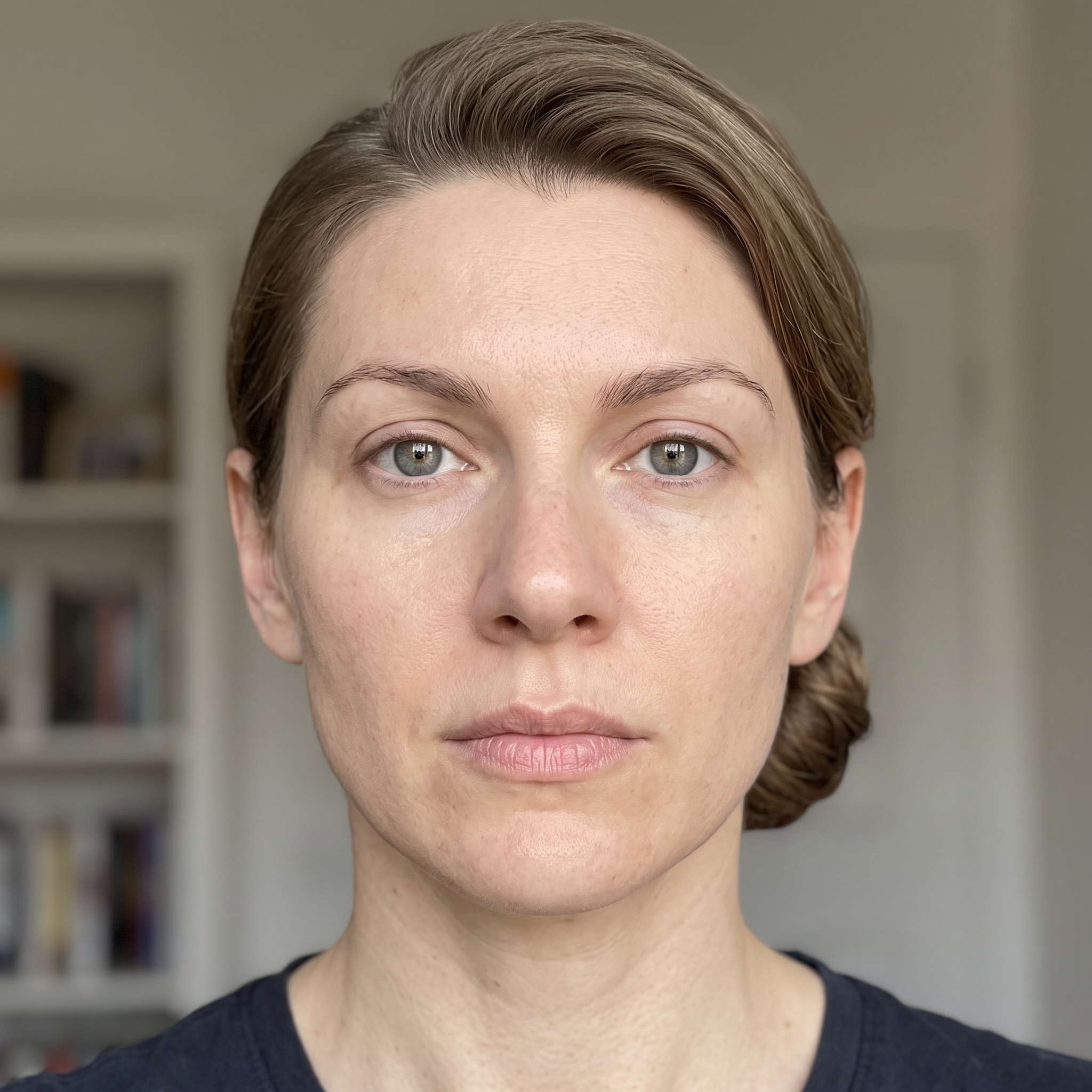
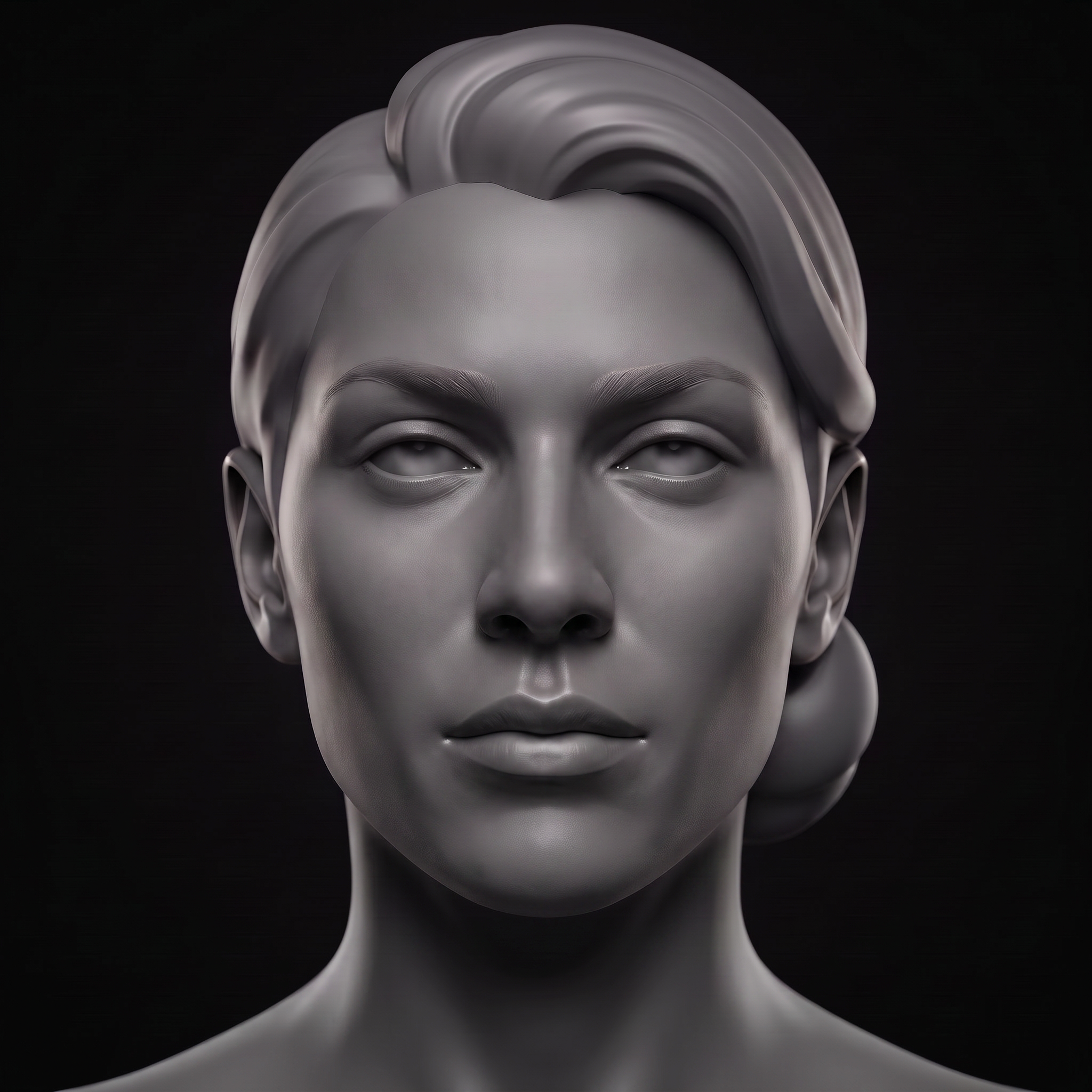
Jawline definition on the landmark mesh.
The overlay is drawn from the same 478 point MediaPipe landmark set Facemap uses on your own scan, so every caliper, axis and node sits on the exact anatomy the measurement is taken from.
Sample reading, Jaw contour, width and symmetry
- Bigonial width
- 118.7 mm
- Jaw / cheek ratio
- 0.86
- Contour sharpness
- 0.88
- Jaw symmetry
- 95.6%
How the scan works
Capture
Guided front-on frame with even light, no upload.
Landmark
478 point mesh placed on your face in real time.
Report
Jawline definition measured, normalised and explained.
What is jawline definition?
Jawline definition is not one number but a set of related measurements: contour sharpness along the jaw edge, bigonial width, the ratio between jaw width and cheekbone width, and the degree of left to right symmetry across the jaw.
How Facemap measures jawline definition
The mesh traces a chain of landmarks along the jaw border from ear to chin on each side. Contour sharpness comes from how tightly this line turns at the jaw angle rather than curving gradually. Bigonial width is the straight-line distance between the two jaw angle points. The jaw-to-cheek ratio divides bigonial width by cheekbone width from the same frame. Symmetry compares the left contour to a mirrored right contour around the facial midline.
What the typical range looks like
There is no universal target, since jaw structure varies widely and is strongly influenced by bone shape, muscle mass and soft tissue thickness. A narrower jaw-to-cheek ratio tends to read as a tapered, heart-shaped lower face, while a ratio closer to one reads as a squarer lower face. Sharper contour scores generally correspond to a more visually defined jaw edge under any lighting.
How to read your result
Read bigonial width and the jaw-to-cheek ratio together with your face shape result, since the same jaw width reads differently depending on cheekbone width and facial thirds proportions. A meaningful symmetry gap is worth checking against your overall facial symmetry score to see if it is isolated to the jaw.
The jawline definition formula: how we calculate it
Bigonial width against bizygomatic width, the cheek-to-jaw taper. Landmark numbers are MediaPipe Face Landmarker indices, and every distance is normalised to your own face so camera distance and image size cancel out.
dist(172, 397) / dist(234, 454)
- Landmarks used
- 172, 397, 234, 454
- Reference target
- 0.72
- Tolerance band
- 0.15
Your reading is compared with that published reference on a Gaussian match curve: score = round( 100 x exp( -0.5 x ( (reading - target) / tolerance )^2 ) ), clamped to 1 to 99. Basis for the reference value: taper ratios associated with a defined but not square lower face. The headline Attractiveness Score works differently: all readings are corrected for head angle and expression, weighted by confidence and mapped onto a 1 to 100 scale by a model calibrated against a published research set of more than Facemap scans.
Read the full Facemap methodology, including how the 22 measurement categories combine into your Attractiveness Score.
Jawline definition reference table
Jaw-to-cheek width ratio bands and how each one reads.
- Above 0.95Wide
Jaw width close to or exceeding cheekbone width
- 0.85 to 0.95Balanced
The most commonly measured band
- 0.75 to 0.84Tapered
Jaw notably narrower than cheekbones
- Below 0.75Narrow
Pronounced taper toward the chin
What makes a jawline read as defined?
Contour sharpness, not width alone, drives how defined a jawline appears. Several structural and soft tissue factors combine to produce it.
- Bone angle at the gonial region, covered in more depth by gonial angle
- Thickness of the soft tissue and fat layer over the jaw
- Muscle tone in the masseter, which sits at the jaw angle
- Skin laxity, which softens contour with age
- Head position during capture, corrected by the landmark model
Bigonial width and facial proportion
Bigonial width, the distance between the two jaw angle points, is a standalone structural measurement that also feeds directly into the jaw-to-cheek ratio and interacts with facial thirds. A wide bigonial width paired with a narrow upper face tends to read as a strong lower third, while the same width against wide cheekbones reads as balanced.
Jaw symmetry versus jaw definition
A jaw can be sharply defined on both sides yet still asymmetric, or softly contoured yet perfectly even, so these are reported as separate figures rather than blended into one score. Facemap compares the left and right jaw contour independently of sharpness or width, which keeps the source of any difference clear.
The jawline definition formula, step by step
The jawline calculator does not reduce your jaw to a single width number. It weighs gonion to gonion width against the sharpness of the gonion to menton contour to produce a definition index.
- Measure bigonial width, the straight-line distance between the left and right gonion points
- Trace the contour from each gonion to the menton, the chin point, on both sides
- Score how sharply that contour turns at the gonion rather than curving gradually
- Weigh the bigonial width against the contour sharpness score
- Combine both into a single jawline definition index
Your reading
Measure your jawline definition in about twenty seconds.
The scan runs in your browser. Nothing is uploaded, and free basic reports need no account.
Questions
Jawline test: frequently asked questions
What is jawline definition exactly?
It is a combination of jaw contour sharpness, bigonial width, the ratio of jaw width to cheekbone width and left to right jaw symmetry, each reported separately by Facemap rather than as one blended score.
Is a wider jaw more defined?
Not necessarily. Width and sharpness are independent, a narrow jaw can be sharply contoured and a wide jaw can be softly contoured, which is why the scan reports both.
What causes jawline asymmetry?
Bone growth differences, chewing habits and muscle development between sides are the most common structural causes. Mild asymmetry is normal and Facemap does not treat it as a problem to correct.
How does jawline definition relate to gonial angle?
Gonial angle measures the specific bone angle at the jaw corner, while jawline definition combines that structural input with soft tissue contour, width and symmetry into a fuller picture.
Can jawline definition change over time?
Body composition, muscle tone and skin laxity can all shift how defined a jawline appears, even though the underlying bone structure stays largely fixed after early adulthood.
What is the jawline definition formula?
Facemap measures bigonial width, the distance between the two gonion points, and weighs it against how sharply the gonion to menton contour turns, then combines both into a single definition index rather than one raw width figure.
Is the jawline test an AI face scan?
Yes. Google's MediaPipe Face Mesh machine learning model runs in your browser and places 478 3D landmarks along your jaw. Nothing is uploaded, and the score comes from fixed geometry, not a subjective opinion.
Related tools
Measurements that read alongside jawline definition.
Jawline structure index
Gonial angle face scan
The angle at the back of the jaw, where the lower border meets the posterior border, a core index of lower-face definition.
Oval, round, square, heart
Face shape face scan
We compare jaw width, cheekbone width, forehead width and total face length to classify your face shape from six common categories.
Bilateral landmark balance
Facial symmetry face scan
We compare 478 corresponding landmarks across the vertical midline of your face, region by region, to quantify how closely each side mirrors the other.
Every tool